Table of Contents
The Grid, The Road, and The Region: Understanding the New Infrastructure Powering a Sustainable Future
We don’t just live in houses; we live in systems. Power grids, transit networks, water loops, waste streams, and digital pathways shape our daily lives far more than we notice. When those systems shift—even slightly—everything else shifts with them. GreenOS looks at these systems not as abstract engineering puzzles, but as the operating framework for a resilient, creative, low‑carbon future.
This guide breaks down the “new infrastructure” in a way that’s accessible, modern, and grounded in both practicality and vision. You’ll see how electrification, circular regional systems, and next‑generation mobility are converging into a new kind of ecosystem—one that supports cleaner energy, healthier communities, and more human‑centered design.
Why the New Infrastructure Matters
The new infrastructure isn’t just about replacing old pipes or upgrading power lines. It’s about rethinking the entire operating system of modern life. As clean energy becomes cheaper and more abundant, the systems that support our homes, cities, and regions must evolve to match.
This shift is already underway. Renewable energy is scaling. Electric vehicles are becoming mainstream. Cities are rethinking streets. Regions are experimenting with circular waste loops. And individuals—through daily habits—are becoming active participants in a cleaner, more efficient ecosystem.
The goal isn’t perfection. It’s progress. And progress happens when we understand the systems we live inside.
Electrification: Why the “Everything Electric” Movement Matters
Electrification is the backbone of the new infrastructure. It’s the simplest, cleanest, and most scalable way to decarbonize everyday life.
Electricity as the Universal Connector
Electricity is the only energy form that can be generated cleanly, transported efficiently, and used flexibly across sectors. Solar, wind, geothermal, and hydro all feed into the same grid. That grid powers homes, vehicles, heat pumps, and eventually entire industrial processes.
The Rise of the Distributed Grid
The old grid was one‑directional: big power plants → transmission lines → homes.
The new grid is multi‑directional: homes with solar panels, community microgrids, battery storage, EVs acting as mobile power banks, and regional renewable hubs all interacting dynamically.
This shift creates:
- Resilience during outages
- Lower long‑term costs
- Cleaner air and water
- More local control over energy sources
Electrification in Daily Life
You don’t need to overhaul your home to participate. Small steps matter:
- Switching to induction cooking
- Using heat pumps for heating and cooling
- Charging an EV or e‑bike
- Adding smart thermostats
- Supporting community solar
Each action strengthens the larger system. Electrification is a collective upgrade, built from millions of individual choices.
Circular Logic: How Regional Waste‑to‑Energy Systems Work
The new infrastructure isn’t just about energy—it’s about loops. Linear systems (take → make → waste) are being replaced by circular ones (reuse → regenerate → repurpose).
The Regional Loop
A circular regional system treats waste as a resource. Organic waste becomes biogas. Plastics become feedstock for new materials. Heat from industrial processes warms nearby buildings. Water is cleaned and reused instead of discarded.
This creates:
- Lower landfill use
- Local energy generation
- Reduced transportation emissions
- More efficient resource use
Waste‑to‑Energy as a Bridge Technology
While zero waste is the long‑term goal, waste‑to‑energy systems help regions transition. Modern facilities capture emissions, generate electricity, and reduce the volume of waste dramatically. They’re not the final answer, but they’re a meaningful step toward a cleaner loop.
What This Means for You
You don’t need to run a biogas plant to participate in circular systems. You can:
- Compost food scraps
- Choose products with recycled content
- Support local recycling programs
- Reduce single‑use plastics
- Buy durable goods instead of disposable ones
Circularity starts at home, but it scales regionally.
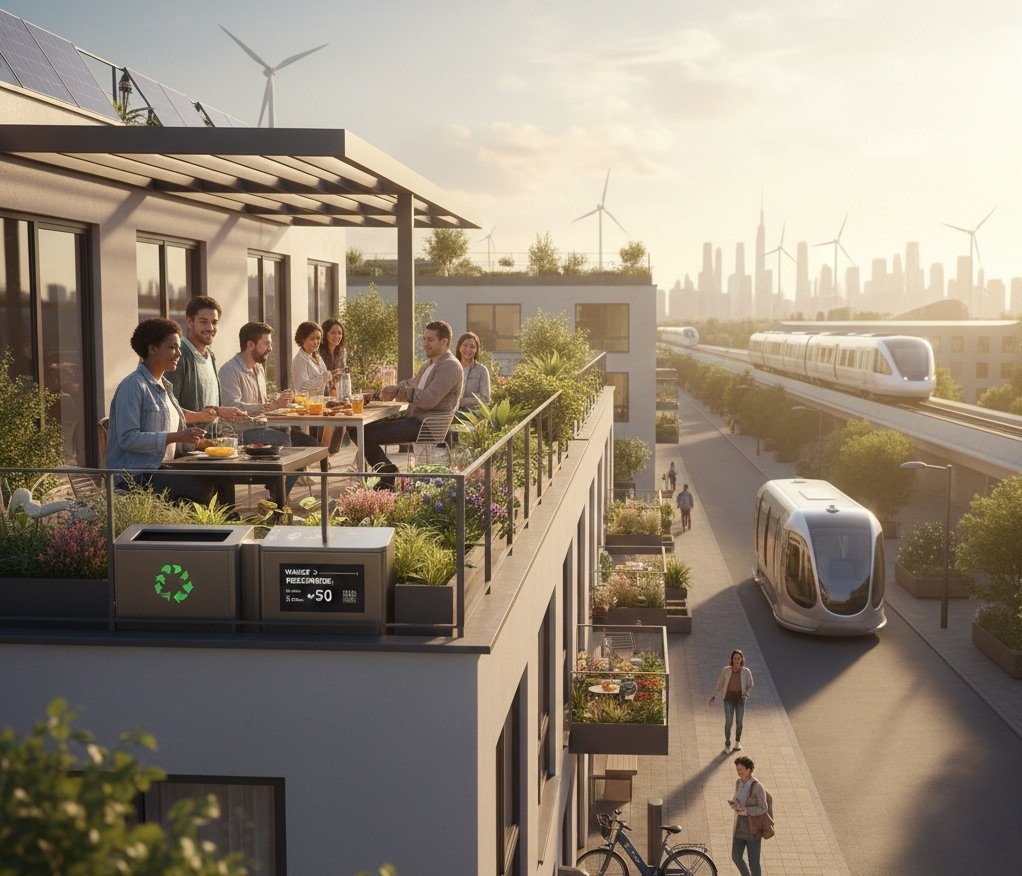
The Future of Motion: Moving Beyond the Car‑Centric City
Transportation is the circulatory system of modern life. But the car‑centric model—wide roads, long commutes, sprawling suburbs—has reached its limits. The new infrastructure is about mobility, not just vehicles.
Electric Mobility as a Platform
Electric vehicles are important, but they’re only one piece of the puzzle. The future includes:
- E‑bikes and e‑scooters
- Electric buses and microtransit
- Autonomous shuttles
- Walkable neighborhoods
- High‑speed regional rail
- Smart traffic systems
The goal is simple: more ways to move with less energy and less friction.
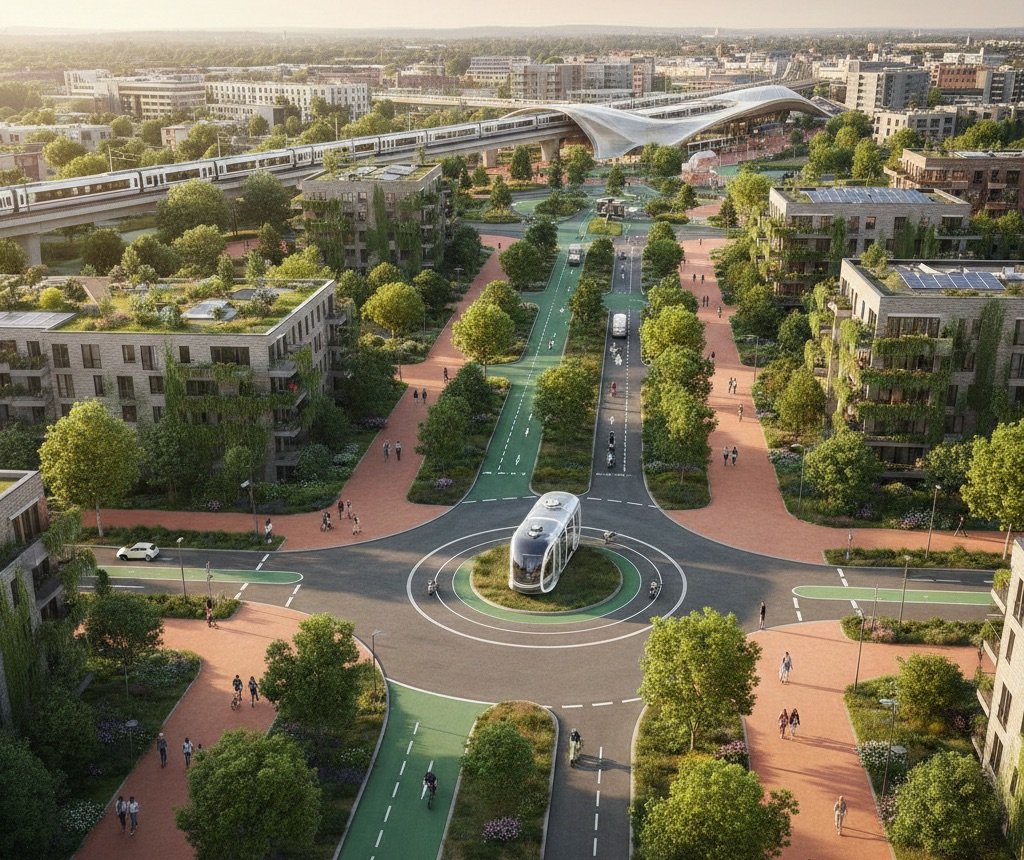
Designing Cities for People, Not Cars
Cities around the world are redesigning streets to prioritize:
- Safe bike lanes
- Wider sidewalks
- Green corridors
- Car‑free zones
- Mixed‑use neighborhoods
These changes reduce emissions, improve health, and make cities more livable.
Regional Mobility Networks
The new infrastructure connects cities to their surrounding regions through:
- Electric rail corridors
- Charging networks
- Renewable‑powered freight systems
- Mobility hubs that integrate multiple modes
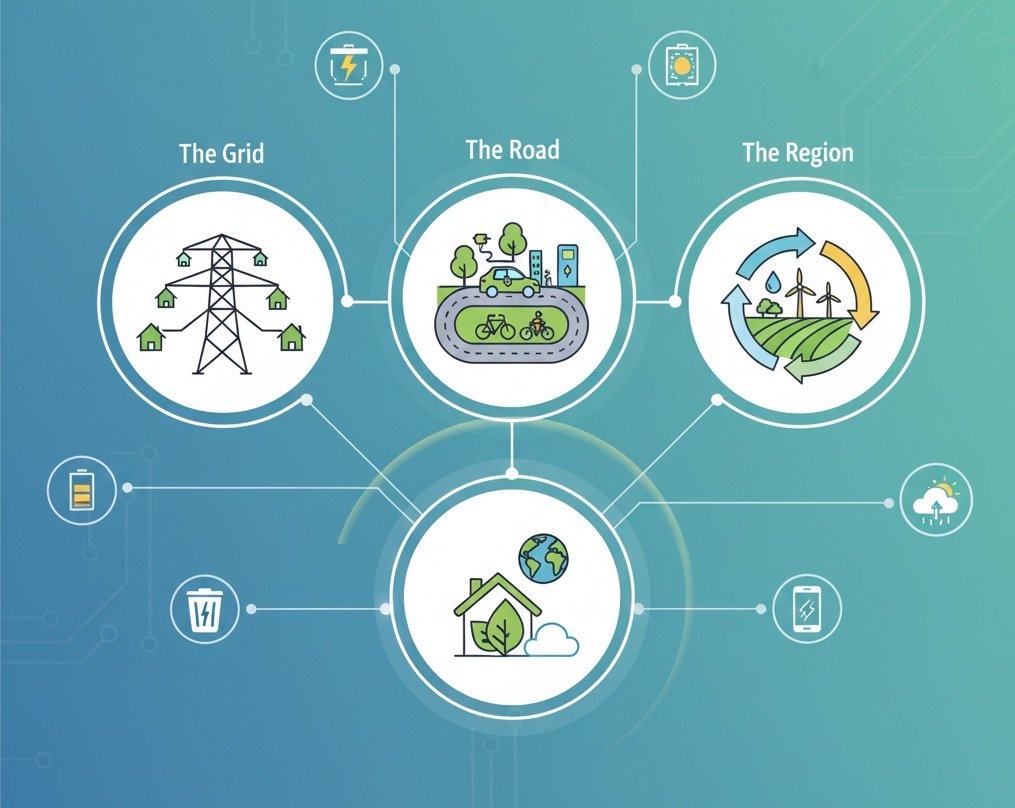
This is where electrification, circularity, and mobility converge into a single, cohesive system.
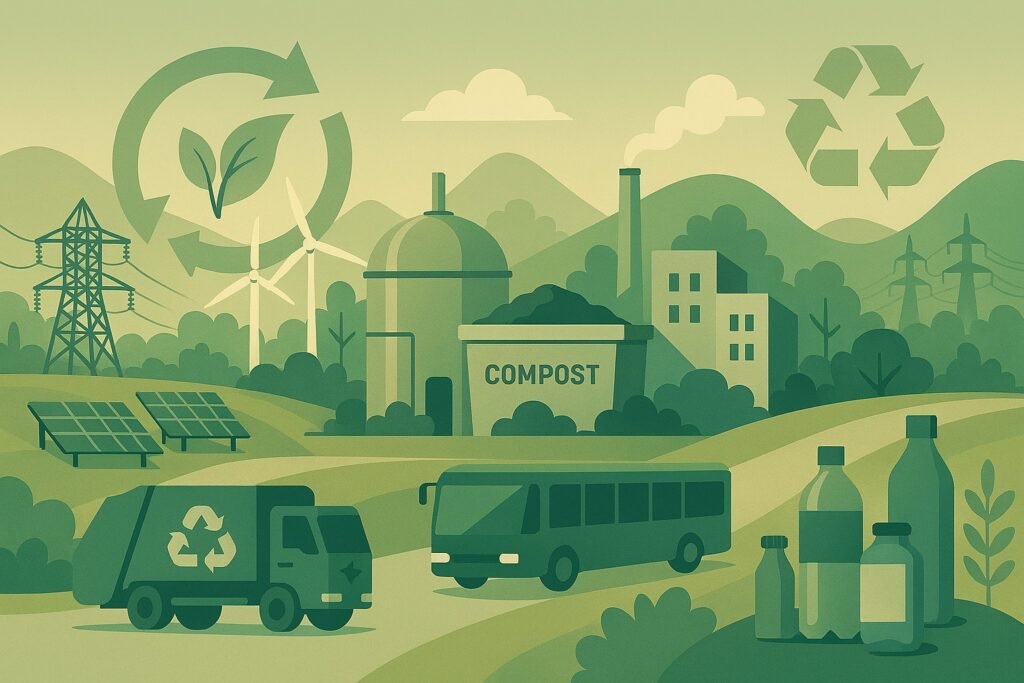
Seeing the Big Picture Without an Engineering Degree
You don’t need to understand grid architecture or transit modeling to grasp the new infrastructure. What matters is recognizing the patterns:
- Electrification makes clean energy universal.
- Circular systems turn waste into resources.
- Future mobility reduces friction and expands freedom.
- Regional thinking replaces isolated solutions with interconnected ones.
- Daily habits reinforce the larger system.
The new infrastructure is not abstract—it’s personal. It shapes how we cook, commute, heat our homes, and design our communities. It’s the foundation for a future where sustainability isn’t a burden but a platform for human progress.
Frequently Asked Questions
What is the “new infrastructure”?
It refers to modern systems—energy, mobility, waste, and regional grids—designed around clean power, circularity, and resilience.
Why is electrification so important?
Electricity can be generated cleanly and used across nearly every sector, making it the most scalable path to decarbonization.
How do circular regional systems work?
They convert waste into energy or reusable materials, reducing landfill use and creating local resource loops.
Is the future of transportation just electric cars?
No. The new mobility ecosystem includes e‑bikes, transit, walkable design, and regional electric rail.
How can individuals support the new infrastructure?
By adopting small electrification habits, reducing waste, and supporting local clean‑energy and mobility initiatives.

 GreenOS.org | LOW-WASTE LIVING
The Low-Waste Audit: Finding Your Starting Line
Reducing waste isn’t about perfection—it’s about awareness. The low-waste audit is your starting line, not your finish line. It’s a tool for clarity, not guilt. By taking stock of your habits, materials, and systems, you...
Final Thoughts
The new infrastructure is already emerging around us—quietly, steadily, and with enormous potential. It’s not just about cleaner power or smarter transit. It’s about designing systems that support human creativity, resilience, and possibility.
When we electrify our homes, reduce waste, or choose cleaner ways to move, we’re not just making sustainable choices. We’re participating in the operating system of a better‑built world. GreenOS exists to help you see that system clearly—and to help you step into the future with confidence, curiosity, and momentum.