Table of Contents
Energy is the backbone of every modern economy, and the world’s largest energy users are rewriting their strategies in real time. What was once a race for supply is now a race for resilience, diversification, and future‑proof energy systems. This shift isn’t just geopolitical—it’s deeply practical, rooted in the understanding that sustainable energy isn’t a moral accessory but a structural advantage.
This post explores how major global energy consumers are diversifying their energy portfolios, reducing vulnerability, and preparing for a world where clean power is the foundation of economic strength.
The New Reality of Global Energy Dependence
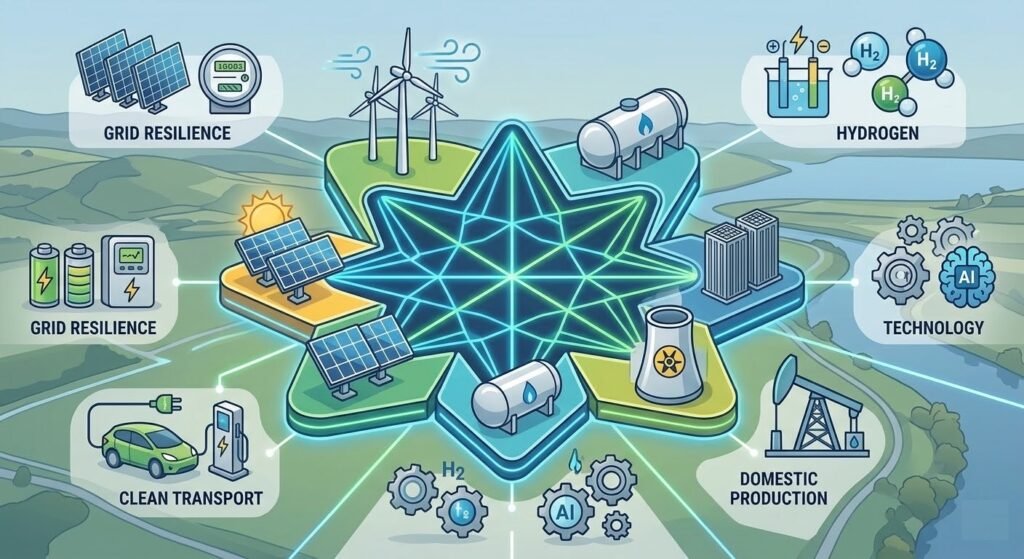
For decades, energy dependence was defined by a single metric: where a nation sourced its fuel. Today, dependence is multidimensional. It includes:
- Fuel diversity
- Grid resilience
- Domestic production capacity
- Technological adaptability
- Clean‑energy scalability
- Geopolitical exposure
Major energy users—China, the United States, India, Japan, and the European Union—are no longer simply trying to secure supply. They’re building energy operating systems that can withstand shocks, support electrification, and unlock new economic potential.
This diversification playbook is becoming the blueprint for the next era of global stability.
Why Diversification Matters More Than Ever
Energy diversification is no longer a luxury. It’s a survival strategy.
1. Geopolitical Volatility
Conflicts, sanctions, and supply disruptions have shown how fragile single‑source dependence can be. Nations are spreading risk across fuels, technologies, and regions.
2. Electrification of Everything
Transportation, manufacturing, and buildings are rapidly electrifying. This increases demand but also creates opportunities for cleaner, more flexible systems.
3. Climate Commitments
Net‑zero goals require a shift toward renewables, hydrogen, and advanced nuclear—each a pillar of long‑term diversification.
4. Economic Competitiveness
Energy abundance is becoming a competitive advantage. Countries that secure stable, low‑cost clean power will lead in manufacturing, AI, data centers, and next‑generation industry.
The Diversification Playbook: How Major Users Are Reducing Dependence
Below is the emerging global strategy—a modular playbook that nations are adapting to their own geography, politics, and industrial needs.
1. Expanding Renewable Energy at Scale
Solar and wind are no longer niche—they’re the fastest‑growing energy sources on Earth. Major users are:
- Building utility‑scale solar farms
- Deploying offshore wind
- Integrating distributed rooftop systems
- Investing in long‑duration storage
Renewables reduce fuel import dependence and stabilize long‑term energy costs.
2. Reimagining the Grid as a Flexible, Digital Platform
The modern grid is shifting from a one‑way pipeline to a dynamic, intelligent network. Diversification includes:
- Smart grid technologies
- AI‑driven demand management
- Microgrids for resilience
- High‑voltage transmission expansion
This grid evolution allows nations to absorb more renewables while reducing blackout risk.
3. Investing in Hydrogen and Synthetic Fuels
Hydrogen—especially green hydrogen—is emerging as a strategic diversification tool for:
- Heavy industry
- Shipping
- Aviation
- Seasonal energy storage
Major users are building hydrogen corridors, electrolyzer capacity, and cross‑border partnerships.
4. Reinforcing Nuclear as a Stability Anchor
Advanced nuclear reactors, small modular reactors (SMRs), and next‑gen designs are returning as essential components of energy independence.
Nuclear provides:
- Zero‑carbon baseload
- High energy density
- Long‑term price stability
Countries like the U.S., France, China, and South Korea are leading the charge.
5. Expanding Domestic Fossil Production—But Cleaner
Even as clean energy grows, many nations are diversifying by:
- Increasing domestic natural gas
- Reducing coal imports
- Deploying carbon capture
- Improving efficiency standards
This isn’t about clinging to the past—it’s about stabilizing the transition.
6. Building Strategic Energy Reserves
Oil reserves are well known, but nations are now stockpiling:
- Natural gas
- Critical minerals
- Battery materials
- Hydrogen storage
Reserves act as shock absorbers during global disruptions.
7. Electrifying Transportation and Industry
Diversification also means reducing dependence on imported oil by shifting to:
- EVs
- Electric freight
- Heat pumps
- Induction manufacturing
Every electrified system reduces exposure to volatile fuel markets.
8. Localizing Clean‑Tech Manufacturing
Energy independence now includes technology independence:
- Solar panel manufacturing
- Battery gigafactories
- Wind turbine production
- Grid component fabrication
This reduces reliance on single‑country supply chains.
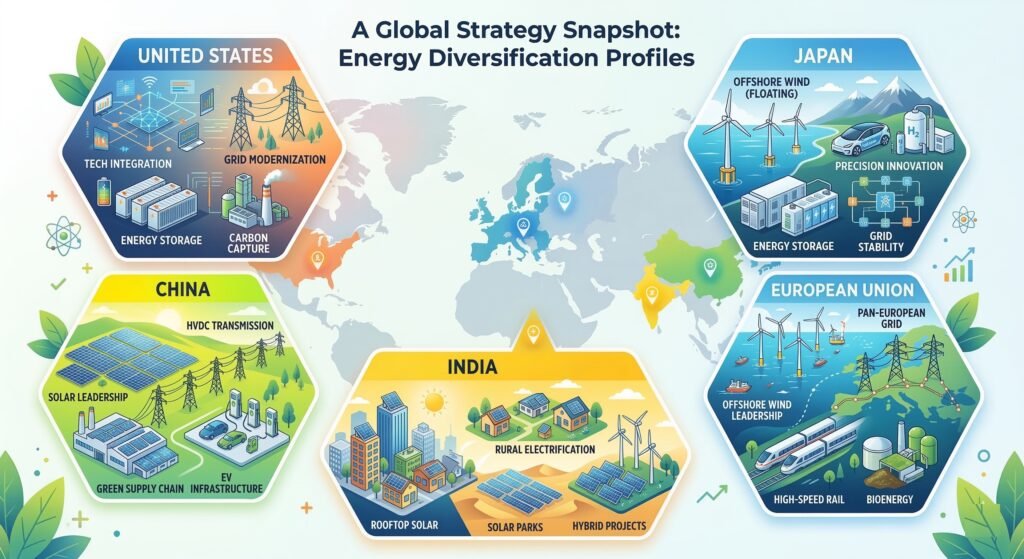
Top Global Energy Users and Their Diversification Profiles
Below is a simplified snapshot of major users and their diversification strategies.
| Country / Region | Primary Energy Mix | Diversification Strengths | Key Vulnerabilities |
|---|---|---|---|
| China | Coal, renewables, oil | Massive renewable buildout, EV leadership | Coal dependence, import exposure |
| United States | Natural gas, oil, renewables | Strong domestic production, nuclear revival | Grid aging, political fragmentation |
| India | Coal, oil | Solar expansion, green hydrogen | High coal reliance, rapid demand growth |
| European Union | Natural gas, nuclear, renewables | Offshore wind, efficiency leadership | Import dependence, limited domestic fuels |
| Japan | LNG, oil, nuclear | Hydrogen leadership, efficiency | Import dependence, limited land |
| South Korea | Nuclear, LNG | Advanced nuclear, hydrogen | High import reliance |
| Brazil | Hydro, oil | Biofuels, hydro stability | Drought risk |
| Saudi Arabia | Oil | Solar expansion, hydrogen | Oil‑centric economy |
Nations Approaching True Energy Independence
These countries will be explored in a future post, but they serve as a powerful contrast—showing what near‑complete independence looks like.
| Country | Why They’re Nearly Independent |
|---|---|
| Iceland | Geothermal + hydro dominance |
| Norway | Hydro abundance + strong grid |
| Paraguay | Massive hydro surplus |
| Uruguay | Wind + solar + hydro integration |
| New Zealand | High renewable penetration |
These nations demonstrate what’s possible when geography, policy, and long‑term planning align.
Frequently Asked Questions
How do major energy users reduce dependence on imports?
They diversify their energy mix with renewables, nuclear, hydrogen, and domestic production while modernizing their grids.
Why is energy diversification important for economic stability?
It protects nations from price shocks, supply disruptions, and geopolitical risks while supporting long‑term industrial growth.
What role does clean energy play in diversification?
Clean energy reduces fuel imports, stabilizes costs, and enables electrification across transportation and industry.
Are fossil fuels still part of the diversification strategy?
Yes—many nations maintain domestic fossil production as a transitional stability tool while scaling clean alternatives.
Which countries are closest to true energy independence?
Iceland, Norway, Paraguay, Uruguay, and New Zealand are among the closest due to their renewable abundance.

 GreenOS.org | CLEAN POWER
Harnessing the Green Power of Water 2025 and beyond: Hydroelectric Energy and Its Global Impact
Hydroelectric energy, often referred to as hydropower, is one of the oldest and most reliable sources of renewable energy. By utilizing the energy of flowing or falling water, hydropower has been a cornerstone of clean...
Final Thoughts
Energy diversification is more than a strategy—it’s a transformation. The world’s major energy users are rewriting their energy operating systems to be cleaner, more resilient, and more adaptable. This shift blends practical steps—like grid upgrades and efficiency—with visionary leaps into hydrogen, advanced nuclear, and massive renewable ecosystems.
As we move toward a future defined by electrification and clean abundance, diversification becomes the bridge between today’s constraints and tomorrow’s possibilities. It’s not just about reducing dependence—it’s about unlocking a more stable, creative, and prosperous world.