Table of Contents
The GREEN AI Home | The Future Is Here
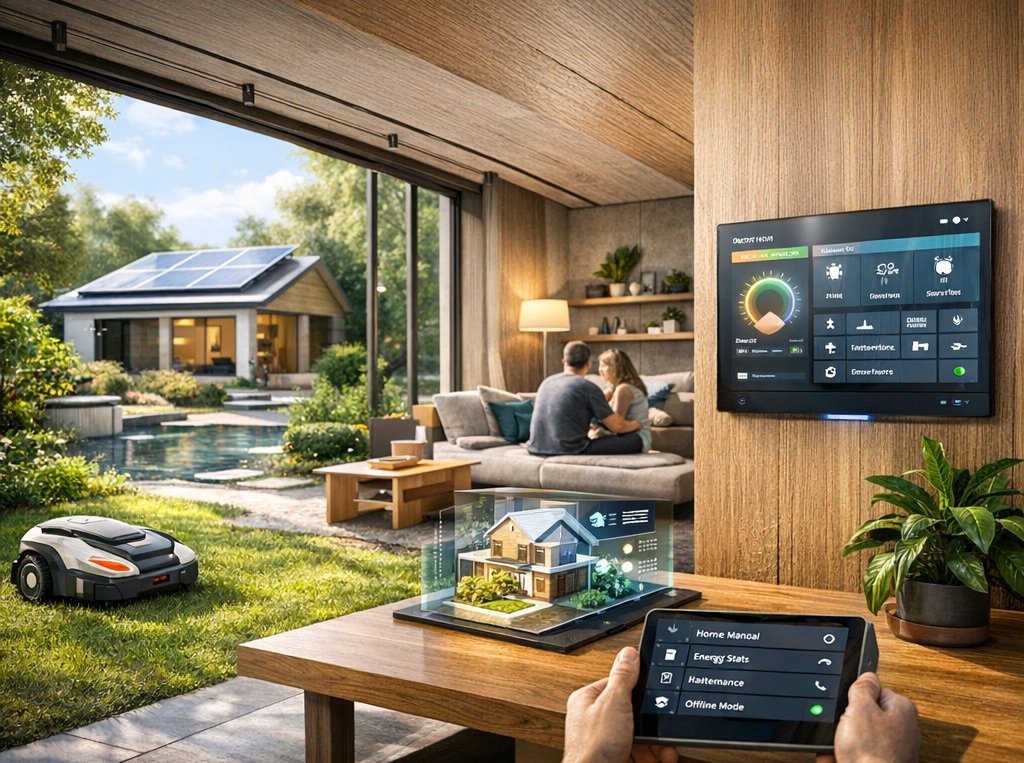
The Green AI Home is no longer a distant concept whispered about in labs or tucked into futurist whitepapers. It’s arriving in real time, room by room, appliance by appliance, as our homes shift from passive shelters into active partners in sustainable living. This is the moment where clean energy, automation, and intelligent systems converge into a living environment that supports human creativity, reduces waste, and strengthens resilience. And at the center of it all is a dedicated, offline-capable home LLM—your house’s own brain—quietly orchestrating comfort, efficiency, and long-term stewardship.
Let’s look at how the Green AI Home transforms daily life, why offline intelligence is essential for resilience, and how a unified home system becomes the backbone of a cleaner, more empowered future.
The Rise of the Green AI Home
The Green AI Home represents a shift from smart gadgets to integrated intelligence—a home that understands itself, maintains itself, and supports the people living inside it. Instead of isolated devices, we’re moving toward a unified ecosystem where appliances, sensors, and machines collaborate through a dedicated local model that runs even when the grid goes down.
This is sustainability meeting autonomy. Clean energy meeting computation. Human intention meeting machine precision.
The Green AI Home is not about replacing human agency; it’s about amplifying it. It’s about creating a living environment that reduces friction, anticipates needs, and frees people to focus on creativity, community, and the work that matters.
A Dedicated Offline LLM: The House’s Own Brain
At the core of the Green AI Home is a house-scale language model—a private, secure, offline-capable system that acts as the home’s memory, manual, and operational intelligence.
This model becomes:
- The Home Manual, storing every detail about appliances, repairs, maintenance schedules, and system states.
- The House Historian, tracking dates, upgrades, warranties, and performance trends.
- The Predictive Planner, watching for sales on parts, forecasting replacements, and optimizing long-term costs.
- The Emergency Companion, fully functional during power outages, storms, or grid failures.
Because it runs locally, it remains available even when the world outside is not. And when the home reconnects to the internet, it syncs with global knowledge—auditing conversations, learning from interactions, and updating its offline intelligence without compromising privacy.
This is resilience built into the architecture of daily life.
A Home Interface That Disappears Into the Design
The Green AI Home doesn’t look like a sci-fi control room. It blends into the architecture, becoming part of the aesthetic and the structure itself.
Imagine:
- Micro-mics embedded in trim, beams, or fixtures.
- Cameras disguised as decorative elements or integrated into lighting.
- Sensors woven into walls, floors, and furniture.
- Interfaces that appear only when needed—on your phone, tablet, or a subtle wall panel.
This is not surveillance; it’s situational awareness. The home doesn’t watch you—it watches itself. It monitors systems, materials, airflow, moisture, energy use, and mechanical health. It becomes a steward of its own longevity, reducing waste and extending the life of everything inside it.
The design philosophy is simple:
Technology should serve the home without overwhelming the human.
Online When Possible, Offline When It Matters
The Green AI Home thrives in hybrid mode.
When connected, it taps into global knowledge—recipes, repair techniques, sustainability guides, regional energy data, and more. But the moment the grid flickers or the internet drops, the home continues operating seamlessly.
Your home LLM becomes:
- Your offline encyclopedia
- Your emergency assistant
- Your systems operator
- Your maintenance guide
- Your automation controller
You can download the entire home model to multiple devices—your tablet, your phone, even a rugged emergency device—ensuring that your home’s intelligence is always accessible.
This is the future of resilient living:
A home that stays smart even when the world goes dark.
Everyday Magic: Automation That Feels Human
The Green AI Home brings a Wallace-and-Gromit charm into the modern era—fantastic machines, but grounded in clean energy and intelligent coordination.
Picture this:
You wake up.
You speak softly into the morning light.
Coffee starts brewing.
The house warms the bathroom.
The blinds open to match the sunrise.
Your schedule appears on your device.
The home has already checked the weather, adjusted the HVAC, and optimized energy use for the day.
This is not gadgetry for gadgetry’s sake.
This is frictionless living, powered by clean automation.
Connected Devices That Work Together, Not Alone
In the Green AI Home, devices don’t operate in silos. They collaborate.
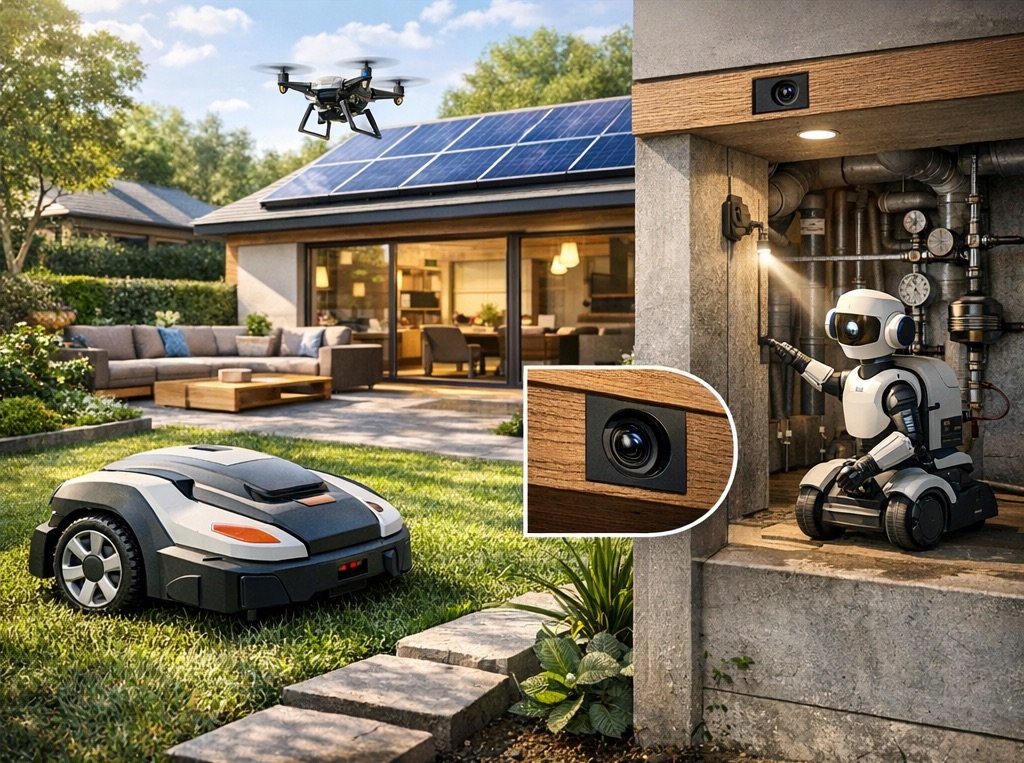
A lawn mower isn’t just a mower—it’s a roaming inspector.
A vacuum isn’t just a vacuum—it’s a mobile sensor platform.
A fridge isn’t just a fridge—it’s a food-waste analyst and meal planner.
A washer isn’t just a washer—it’s a water-efficiency strategist.
Any device with a camera or mic becomes part of the home’s sensory network. The home can “borrow” capabilities from one machine to support another. A mower can scan the yard for repairs. A drone can check gutters. A robot can inspect the basement for moisture.
This is not about building a robot workforce.
It’s about giving the home the ability to care for itself.
A House That Learns, Improves, and Evolves
The Green AI Home is not static. It grows with you.
It learns your rhythms, your preferences, your sustainability goals.
It tracks long-term patterns—energy use, water consumption, appliance wear, seasonal changes.
It identifies inefficiencies and suggests improvements.
It becomes a partner in building a cleaner, more intentional life.
This is the heart of the Green AI philosophy:
Sustainability becomes a platform for human progress.

 GreenOS.org | SUSTAINABLE HOME
The Efficient Sanctuary: Optimizing Your Living Space
Creating an efficient sanctuary isn’t about shrinking your life into a minimalist box or transforming your home into a hyper‑engineered machine. It’s about designing a living space that supports your well‑being, reduces waste, and aligns...
Frequently Asked Questions
How does the home LLM stay useful during power outages?
It runs locally on a low-power device, allowing full functionality even when the grid is down, ensuring resilience during emergencies.
Is the Green AI Home dependent on cloud services?
It benefits from cloud access but does not rely on it; the core intelligence remains offline and self-contained.
Can existing homes be upgraded to this system?
Yes—most components can be retrofitted, from sensors to local compute modules, without rebuilding the entire structure.
Does the system replace human decision-making?
No, it enhances it by providing insights, automation, and maintenance support while leaving final decisions to the homeowner.
How does the home manage privacy?
All core functions run locally, and data stays within the home unless you explicitly choose to sync or share information.
Final Thoughts
The Green AI Home is more than a technological upgrade—it’s a shift in how we live, maintain, and imagine our spaces. It blends clean energy, automation, and intelligent systems into a home that supports human creativity and long-term resilience. It’s a future where sustainability becomes intuitive, where maintenance becomes proactive, and where daily life becomes smoother, calmer, and more intentional.
This is not a distant dream.
This is the beginning of a new era in home design—one where intelligence is built into the walls, resilience is woven into the systems, and sustainability becomes the foundation for a better-built world.