Table of Contents
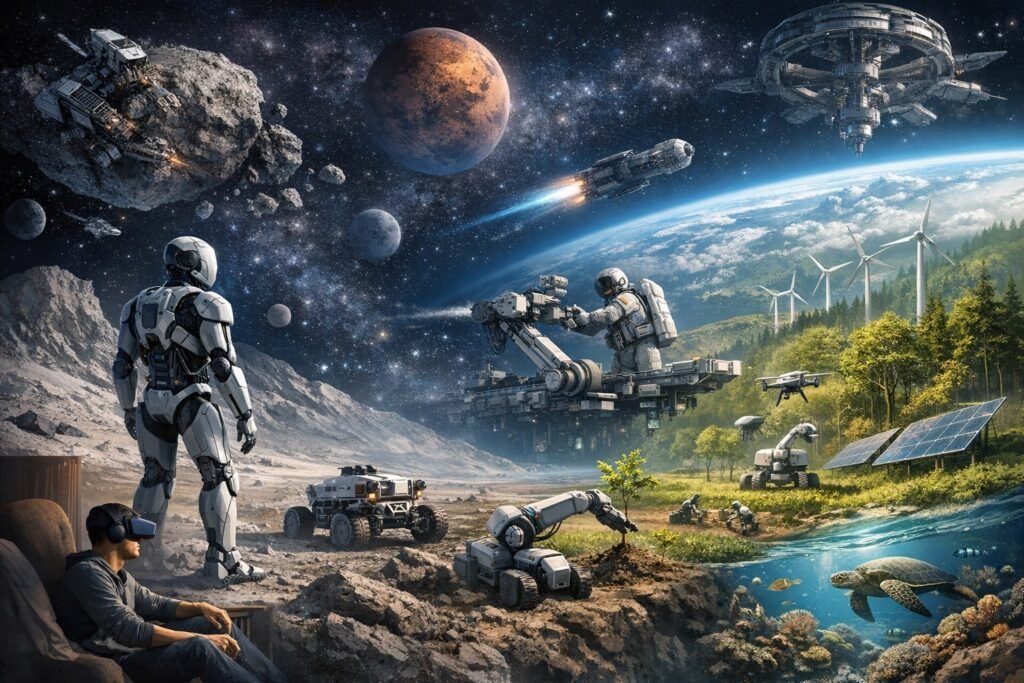
The idea of being anywhere without going anywhere has hovered at the edges of science fiction for decades. But today, as clean energy, robotics, optics, and immersive computing converge, the concept of an ultimate telepresence system is no longer a distant dream. It’s becoming a practical roadmap for sustainable exploration—one that could reshape how humanity studies our planet, reaches other worlds, and designs the next generation of green technologies.
Let’s explore how telepresence can become a cornerstone of green exploration, why it matters for a sustainable future, and what it will take to build a system that feels as real as standing on the surface of Mars or at the edge of a volcanic crater. It’s a vision grounded in pragmatism: a future where we reduce risk, cut emissions, and expand human reach through smarter tools rather than heavier footprints.
The Rise of Green Exploration
The real promise of telepresence isn’t just exploration — it’s efficiency. It’s the idea that we can see more, learn more, and reach farther while using far less energy than ever before. For more than a century, discovery has been tied to fuel: ships, planes, trucks, rockets. Every expedition burned something. Every mission left a mark. Telepresence breaks that pattern. It lets us explore without dragging our bodies, our equipment, and our emissions into every environment we touch.
Green exploration isn’t about stopping discovery. It’s about decoupling discovery from fuel. Instead of sending large teams and heavy machines into fragile ecosystems, we send lightweight robots powered by clean energy. Instead of burning thousands of gallons of fuel to reach a research site, we connect through high‑fidelity VR and experience it as if we were standing there ourselves. The world becomes accessible without being consumed.
This shift aligns with a broader truth: the future of energy is efficiency. Not just producing cleaner power, but needing less of it to accomplish the same goals. Telepresence is a multiplier. It reduces the energy cost of exploration, travel, and labor. It shrinks the footprint of science, industry, and curiosity. And as robotics and VR mature, the materials needed to build these systems will increasingly come from space — where resources are abundant and extraction doesn’t scar the planet.
Fossil fuels don’t disappear in this future. They simply change roles. They become like a campfire — something used intentionally, sparingly, and with appreciation, not something burned at industrial scale to power civilization. Telepresence helps make that transition possible by reducing the need for fuel‑intensive missions and enabling electric, renewable‑powered exploration.
Why Telepresence Matters Now
For decades, exploration has been limited by three things: cost, risk, and distance. Telepresence breaks all three at once — not by sending humans farther, but by sending our presence farther. A robot can go where humans can’t: deep ocean vents, unstable glaciers, volcanic interiors, or the surface of another planet. But until now, the experience of “being there” through a robot has been flat and incomplete. Cameras compress reality. Screens flatten it. The human eye and brain operate on a bandwidth no display has matched.
The next leap is obvious: build a telepresence system that matches human perception so closely that the difference between being there and seeing through a robot becomes negligible. When that happens, exploration becomes electric — literally. The major movers of the future won’t burn fuel; they’ll run on clean power, because the materials to build them will come from space, not from tearing into Earth.
This isn’t escapism. It’s a sustainability strategy. Every mission that can be done remotely is a mission that saves fuel, reduces risk, and preserves ecosystems. Every robot that explores on our behalf is one less vehicle burning its way across the planet. Telepresence becomes a tool for planetary stewardship — a way to expand our reach while shrinking our footprint.
And as VR, robotics, propulsion, and communication systems evolve together, the energy equation shifts even further. We become a civilization that uses less, wastes less, and sources more from beyond Earth. Exploration becomes cleaner. Industry becomes cleaner. Life becomes cleaner.
Telepresence isn’t just a new way to see the world.
It’s a new way to power it.
What the Ultimate Telepresence System Looks Like
A true human‑equivalent telepresence system requires more than high resolution. It needs to replicate the full sensory architecture of human vision and perception. That means:
Light‑field capture that records not just colors and shapes, but the direction of every ray of light.
Varifocal or holographic displays that let your eyes naturally refocus at different distances.
Ultra‑high dynamic range to capture the brightness of sunlight on ice or the depth of shadow in a canyon.
Wide‑field optics that match the human field of view, including peripheral motion cues.
Pupil‑tracked rendering that adjusts focus and clarity based on where you’re actually looking.
Zero‑latency motion coupling so the world feels stable and real as you move.
This isn’t about building a better camera. It’s about building a synthetic window—a portal that preserves the fidelity of reality.
When combined with clean energy robotics, this system becomes a sustainable exploration platform. A robot powered by solar, hydrogen, or advanced batteries could roam remote environments for months or years, sending back a live, immersive experience that feels indistinguishable from standing there yourself.
How Telepresence Supports a Sustainable Future
Telepresence isn’t just a tool for scientists. It’s a framework for how humanity can explore responsibly.
It reduces the need for heavy infrastructure in sensitive environments.
It minimizes emissions by replacing physical travel with digital presence.
It democratizes exploration by making remote places accessible to anyone.
It accelerates innovation by giving designers and engineers real‑world context without leaving their studios.
It supports education by letting students “visit” ecosystems and planets in real time.
In a world where climate resilience and ecological awareness are becoming essential skills, telepresence becomes a bridge between curiosity and conservation.
The Roadmap to Building It
The path to the ultimate telepresence system isn’t a single breakthrough. It’s a long, steady climb — a sequence of technologies maturing together, each unlocking the next. And importantly, this roadmap mirrors the energy transition itself: as telepresence improves, our need for fuel‑burning missions shrinks, and our ability to power exploration with clean electricity grows.
The first step is visual fidelity. We refine high‑dynamic‑range sensors, light‑field cameras, and neural imaging systems that capture the world with more detail than traditional optics. These aren’t just upgrades — they’re the foundation for a system that lets humans “be” anywhere without physically traveling there.
Next, we advance varifocal displays, micro‑OLED optics, and eye‑tracked rendering so VR can finally match the depth cues and clarity of real human vision. This is where telepresence stops feeling like a screen and starts feeling like a window.
In parallel, robotics evolves. Clean‑powered mobility systems, lightweight actuators, and efficient electric drives replace fuel‑burning engines. Telepresence robots begin exploring the oceans, the deep crust, the Moon, and Mars — not as isolated missions, but as a continuous stream of training data. Every hour of human‑guided control teaches the robots how to move, adapt, and solve problems.
Then comes the communication layer. Low‑latency networks, optical relays, and next‑generation data links shrink the delay between operator and robot. Propulsion advances reduce travel time for machines, while communication advances reduce the psychological distance for humans. Presence becomes portable.
Finally, these components unify into a seamless experience — a system where the difference between being somewhere and seeing through a robot becomes negligible. At that point, exploration becomes electric. Heavy fuel‑burning missions fade. Clean energy becomes the default. Fossil fuels don’t disappear, but they shrink into a niche — a campfire instead of a civilization‑scale burn.
This roadmap doesn’t require new physics. It requires coordination, vision, and the willingness to treat telepresence as a core technology for sustainable exploration rather than a novelty. It’s a path where every step makes the next one easier, and every improvement reduces the energy cost of being human.
The Human Element
At its core, telepresence isn’t about machines. It’s about people — how we connect, how we explore, how we learn, and how we choose to use our energy. It’s about expanding human experience without expanding our environmental footprint. It’s about seeing more of the world while consuming less of it.
Telepresence doesn’t replace the human spirit. It amplifies it.
It lets a student in a small apartment walk the cliffs of Mars.
It lets a scientist explore a coral reef without disturbing a single fish.
It lets a disabled person climb a mountain through an avatar.
It lets families meet on distant moons for concerts, then return home for dinner.
And yet, life remains familiar. You still drink tea in your kitchen. You still hear the refrigerator hum. You still live in the world you know — but with access to worlds you never could have reached.
Telepresence doesn’t erase poverty, politics, borders, or belief. It doesn’t magically fix human nature. But it does something quieter and more profound: it gives more people access to wonder. It democratizes exploration. It spreads opportunity without spreading emissions. It lets us grow without consuming.
Green exploration isn’t about limiting ourselves. It’s about unlocking more of the world while respecting its boundaries. It’s about shifting from fuel to electricity, from extraction to regeneration, from burning the planet to caring for it.
Telepresence becomes the tool that lets us explore boldly and sustainably at the same time — a bridge between who we are and who we could become.
Where Telepresence Begins: Earth as the First Frontier
Before we ever send a telepresence rover to Europa or glide a drone across the methane lakes of Titan, the ultimate telepresence system will prove its worth right here on Earth. Our planet is full of environments that are difficult, dangerous, or delicate to reach, and each one becomes a natural testing ground for sustainable exploration. Earth is not just a starting point; it’s the perfect laboratory for refining the fidelity, resilience, and ecological benefits of this technology.
The oceans are the most obvious frontier. More than ninety percent of the seafloor remains unmapped, not because we lack curiosity, but because the deep ocean is hostile to human presence. A telepresence system capable of capturing true light‑field detail and transmitting it through immersive displays would allow scientists to “walk” along coral reefs, hydrothermal vents, and abyssal plains without disturbing fragile ecosystems or burning fuel on repeated expeditions. Clean‑powered submersibles could roam for months, sending back a living, breathing window into a world we barely understand.
Lakes and freshwater systems offer another early proving ground. Many of them are sensitive to human disturbance, yet they hold critical clues about climate change, biodiversity, and water quality. Telepresence allows researchers to study these environments with precision while keeping boots, boats, and noise out of the water. It’s a way to protect the very systems we’re trying to learn from.
Wilderness areas—forests, deserts, tundra, and wetlands—benefit just as much. These landscapes are often remote, fragile, or threatened by human activity. A telepresence rover powered by solar or hydrogen could traverse them with a footprint far lighter than a research team. Scientists could observe wildlife behavior without intrusion, monitor ecological shifts in real time, and gather data that would otherwise require helicopters, trucks, or long expeditions. The technology becomes a tool for conservation rather than disruption.
Emergency response is another domain where telepresence becomes transformative. In the aftermath of earthquakes, floods, wildfires, or industrial accidents, sending people into unstable environments is risky and often slow. A telepresence robot equipped with high‑fidelity vision and low‑latency control could navigate collapsed buildings, flooded streets, or toxic zones while responders remain safely outside. The clarity of the system matters here; when every second counts, responders need to see exactly what they would see with their own eyes. Telepresence becomes a force multiplier for safety and speed.
And yes—volcanoes. These are some of the most dangerous and scientifically valuable environments on Earth. Traditional research requires protective gear, helicopters, and significant risk. A telepresence system with true depth cues, wide‑field optics, and high‑dynamic‑range imaging could let volcanologists stand virtually on the rim of an active crater, watching gas plumes, lava flows, and seismic shifts with the same clarity as being there in person. It’s exploration without the gamble, powered by clean energy and guided by human intuition.
What ties all these environments together is the idea that telepresence doesn’t just prepare us for exploring other worlds. It helps us understand and protect this one. The system becomes a bridge between curiosity and responsibility, allowing us to reach farther while treading lighter. Earth becomes the training ground where we refine the fidelity, durability, and sustainability of the technology before carrying it into the solar system and beyond.
The Size and Footprint of Telepresence Systems: Today and Tomorrow
Every breakthrough technology begins with a question of scale. How big does the hardware need to be? How much power does it require? What can it realistically capture today, and what will the first truly transformative version look like? Telepresence is no different. The size of the system determines where it can go, how long it can operate, and how lightly it can touch the environments it explores. Understanding the footprint of the technology helps us see how close we are to a world where exploration becomes wireless, sustainable, and nearly invisible.
Right now, the most advanced imaging systems capable of approaching human‑eye fidelity are still relatively large. Light‑field cameras, multi‑spectral sensors, and high‑dynamic‑range optics often require housings the size of a small backpack or a compact appliance. They can capture extraordinary detail, but they are not yet miniaturized enough to sit quietly on a cliff edge, glide through a forest, or perch on a rover the size of a household pet. Today’s systems also rely on significant onboard processing or tethered connections to external computers, because the raw data from light‑field capture is enormous. Even with modern compression, the pipeline is heavy.
What these systems can do today is impressive: they can record depth, color, and motion with far more nuance than traditional cameras. They can reconstruct scenes in three dimensions, track subtle lighting shifts, and preserve details that would have been lost a decade ago. But they still fall short of the seamless, natural clarity of human vision. They struggle with true accommodation cues, extreme dynamic range, and the full spectrum of light that makes real environments feel alive. They can approximate reality, but they cannot yet replicate it.
The first truly usable telepresence capture system—the one that feels like a window rather than a camera—will need to be dramatically smaller. It must be compact enough to mount on a rover, drone, or stationary post without disturbing the environment. It must be light enough to run on clean energy, and efficient enough to operate for long periods without constant maintenance. The question becomes: how small is small enough?
A grapefruit‑sized system is a realistic early milestone. At that scale, it could house a dense array of micro‑lenses, sensors, and optical elements capable of capturing a full light field. It could include the necessary stabilization, environmental sealing, and wireless communication hardware without becoming unwieldy. A grapefruit is small enough to fit on a drone, sit on a tripod, or attach to a rover exploring a glacier or coral reef. It’s also large enough to dissipate heat and protect delicate optics.
A basketball‑sized system would offer even more capability. It could support larger optics, deeper sensor stacks, and more robust onboard processing. This size might be ideal for early field deployments in harsh environments—volcano rims, deep‑ocean submersibles, or polar expeditions—where durability matters as much as fidelity. A basketball is still compact enough to be carried by a small robot or drone, yet large enough to house the first generation of true varifocal or holographic capture systems.
A car‑sized system, by contrast, would be unnecessary for telepresence itself. The capture hardware doesn’t need to be large; the heavy lifting happens elsewhere. The real computational demand sits on the receiving end, where vast arrays of servers reconstruct the light field, process depth cues, and stream the experience to a headset. This backend could fill a room or a building, or it could shrink over time as neural rendering becomes more efficient. The capture device remains small and mobile, while the processing infrastructure scales independently.
The beauty of this architecture is that it separates the footprint of exploration from the footprint of computation. The robot in the field can be light, clean, and unobtrusive. The power‑hungry work happens far away, in facilities designed for efficiency and renewable energy. This is what makes telepresence such a natural fit for green exploration: the environmental impact stays low, even as the computational ambition grows.
As technology advances, the grapefruit‑sized system will shrink. Optics will flatten. Sensors will become more efficient. Neural compression will reduce bandwidth demands. One day, the entire telepresence capture system may be no larger than a pair of binoculars or a smartphone. But the first truly transformative version—the one that crosses the threshold from “camera” to “presence”—will likely begin around the size of a grapefruit or basketball, compact enough to travel anywhere, powerful enough to capture everything, and efficient enough to run on clean energy.
This is the scale where telepresence becomes practical, sustainable, and ready for real exploration. It’s the moment when the technology stops being a prototype and starts being a portal.
Who Telepresence Affects Today — And Who It Will Transform Tomorrow
Every major technology begins by reshaping the work of a few specialists before it eventually becomes part of everyday life. Telepresence is following that same arc. Even in its early forms, it is already touching the lives of scientists, engineers, environmental researchers, and emergency responders. These are the people who rely on remote sensing, robotics, and immersive visualization to do their jobs safely and sustainably. For them, telepresence is not a novelty; it’s a tool that expands their reach while reducing their footprint.
Marine biologists, for example, are using remotely operated vehicles to study coral reefs and deep‑sea vents without disturbing fragile ecosystems. Geologists and volcanologists rely on drones and robotic scouts to approach unstable terrain. Climate researchers use remote sensors to monitor ice sheets, forests, and wetlands. Emergency responders deploy robots into collapsed buildings, chemical spills, and wildfire zones where human entry would be dangerous or impossible. These professionals are already living in the early chapters of telepresence, even if the experience is still limited by today’s imaging and display technology.


As the fidelity of telepresence increases, the circle widens. Filmmakers, documentarians, and journalists will use high‑resolution telepresence rigs to capture stories from places too remote or risky to visit. Architects and designers will explore construction sites, landscapes, and urban environments through immersive feeds that feel as real as walking the ground. Educators will guide students through rainforests, coral reefs, and archaeological sites without leaving the classroom. Conservationists will monitor wildlife and ecosystems with minimal disturbance. The technology becomes a bridge between expertise and access, allowing more people to participate in exploration without the cost or carbon footprint of travel.
Once telepresence reaches maturity—once the capture system becomes small, wireless, and capable of matching human vision—the impact becomes universal. It shifts from a specialized tool to a cultural platform. Everyday people will be able to put on a headset and stand virtually on Mars, or sit in the front row of a football game, or watch their daughter’s school play from across the country with the clarity of being in the auditorium. It becomes a new layer of presence in daily life, one that blends entertainment, connection, and discovery.
Citizen science will flourish in this environment. Projects like Zooniverse already show how powerful collective observation can be, but telepresence takes it further. Volunteers could explore coral reefs, track wildlife migrations, or assist in planetary research through live telepresence feeds. Instead of clicking through static images, they would be stepping into living environments, helping scientists classify species, identify geological features, or monitor environmental changes in real time. Exploration becomes participatory, not passive.
And of course, once telepresence becomes a business, it will follow the same path as photography, streaming, and mobile computing. Companies will build platforms where people can subscribe to live telepresence experiences, from national parks to sports arenas to remote research stations. Creators will build their own telepresence channels, offering guided tours of wilderness areas, cultural sites, or scientific expeditions. The technology becomes a marketplace of presence, where the world is accessible from any living room.
This shift doesn’t replace physical experience; it expands it. It gives people more ways to connect, learn, and participate without the environmental cost of constant travel. It democratizes exploration, turning it from a privilege into a shared resource. And it prepares society for a future where telepresence is not just a tool for Earth, but the way we explore the solar system and beyond.
The Shift Away From Physical Travel — And the Rise of Controllable VR Robots
As telepresence becomes more capable, it will inevitably reshape how we move through the world. Travel will always matter, and nothing replaces the warmth of being physically present with people we love. But the need to travel for work, observation, or routine tasks will decline as immersive telepresence becomes more natural, more accessible, and more precise. When a VR system can place you inside a remote environment with the clarity of standing there yourself, the pressure to board a plane or drive across a city begins to soften.
This shift doesn’t eliminate travel; it refines it. Air travel, long commutes, and cross‑country trips for short meetings become less necessary. The carbon footprint of business travel shrinks. The stress of constant mobility eases. People begin to choose travel for meaning rather than obligation. Telepresence becomes a tool that supports a more grounded, low‑waste lifestyle without limiting connection or opportunity.
But the next evolution goes even further. Once telepresence is paired with mobile, humanoid, or semi‑humanoid robots, the idea of “being somewhere” takes on a new dimension. These controllable VR robots become physical avatars—machines that can walk among the public, navigate buildings, attend events, or interact with the world on your behalf. They are not replacements for human presence; they are extensions of it.
Imagine stepping into a VR headset and instantly inhabiting a robot standing in a museum across the world. You turn your head, and the robot turns. You walk forward, and the robot walks. You reach out to examine an artifact, and the robot’s hands respond with precision. The experience is not a simulation; it is a physical interaction mediated through a machine. You are not watching the world—you are moving through it.
These robots could attend conferences, explore cities, or participate in public life without requiring you to travel. They could allow people with mobility challenges to navigate spaces that were previously inaccessible. They could let parents attend a child’s school event from across the country, not as a spectator on a screen, but as a presence in the room. They could enable workers to perform inspections, repairs, or site visits without leaving their homes. The technology becomes a bridge between physical and digital presence, expanding what it means to “show up.”
As the systems mature, they will become part of everyday culture. People will subscribe to telepresence services the way they subscribe to streaming platforms today. They will explore national parks, attend concerts, or walk through historic cities using shared telepresence robots stationed around the world. Sports fans will stand on the sidelines of games. Students will join field trips on other continents. Families will gather in shared virtual‑physical spaces that blend the real and the remote.
This evolution doesn’t diminish human connection; it amplifies it. It gives people more ways to participate in life without the environmental cost of constant travel. It supports a more sustainable world by reducing emissions while expanding access. And it prepares society for a future where telepresence is not just a tool for exploration, but a new layer of human mobility—one that is clean, inclusive, and deeply transformative.
When Telepresence Becomes Embodied: The Rise of Personal Avatars
As telepresence approaches true human‑equivalent fidelity, the boundary between “being there” and “seeing through a camera” begins to dissolve. The experience becomes so rich, so natural, and so visually complete that the only missing elements are the feel of the air, the scent of the environment, and the subtle sensory cues that define physical presence. These elements remain far beyond the reach of current technology, and they may stay that way for decades. But once the visual and spatial fidelity is perfected, the focus shifts to something equally transformative: embodied telepresence through personal robotic avatars.
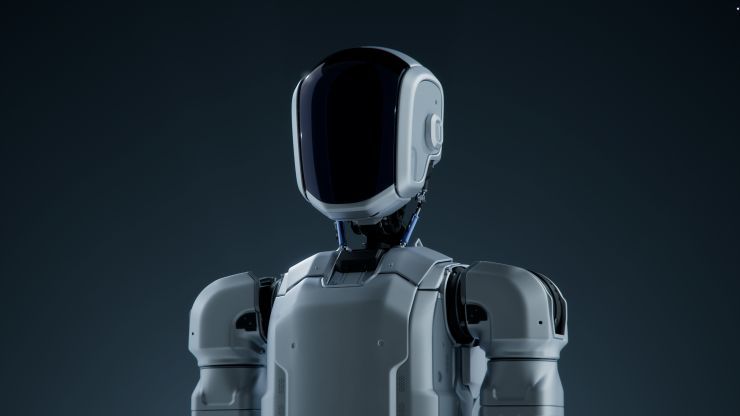

This is where the idea of an avatar stops being a digital cartoon and becomes a physical extension of the self. A robot designed to look, move, and behave like its owner becomes the next evolution of presence. Instead of simply observing a place through a headset, you inhabit a machine that stands in that place, interacts with people, and moves through the world on your behalf. The robot becomes your physical proxy, shaped by your preferences, your gestures, and your identity.
The technology begins with mobility. A robot that can walk among the public, navigate sidewalks, enter buildings, and interact with the environment becomes a new form of transportation—one that doesn’t require you to leave your home. You step into a VR system, and the robot becomes your body in another location. You turn your head, and it turns. You raise your hand, and it mirrors the gesture. You speak, and your voice emerges from the robot with clarity. The experience is not virtual; it is physical presence mediated through a machine.
As the systems mature, the robots begin to reflect their owners more closely. They adopt familiar proportions, recognizable silhouettes, and expressive capabilities that make social interaction natural. People begin to recognize not just the robot, but the person behind it. The avatar becomes a social identity, a way to participate in public life without the environmental cost of travel or the physical strain of constant mobility.
This shift opens new possibilities. A parent could attend a school event from across the country, not as a spectator on a screen, but as a presence in the room. A scientist could walk through a research station in Antarctica without leaving their home. A designer could inspect a construction site on another continent. A person with mobility challenges could navigate spaces that were previously inaccessible. The robot becomes a bridge between physical and digital presence, expanding what it means to show up.
As avatars become more common, they reshape the culture of travel. People begin to choose when to travel physically and when to travel through their avatar. Air travel and long commutes decline as telepresence becomes more natural and more accepted. Cities adapt to accommodate avatar traffic, with designated lanes, access points, and public charging stations. The environmental benefits compound as millions of unnecessary trips disappear from the global transportation system.
This evolution doesn’t replace human connection; it expands it. It gives people more ways to participate in life, more ways to explore, and more ways to contribute without the cost, risk, or carbon footprint of constant movement. It supports a more sustainable world by reducing emissions while increasing access. And it prepares society for a future where telepresence is not just a tool for exploration, but a new layer of human identity—one that blends physical presence, digital mobility, and clean technology into a single, transformative platform.
When Avatars Redefine Identity: A World Beyond Language and Appearance
As embodied telepresence matures, something subtle but profound begins to happen. When people inhabit robotic avatars that move, gesture, and interact on their behalf, the usual markers of identity—language, race, physical ability, and even age—start to soften. The robot becomes a neutral vessel, a shared interface that levels the field in ways our physical world rarely does. It doesn’t erase individuality, but it shifts the focus from appearance to intention, from surface traits to the substance of how we show up.
In a world where avatars walk among the public, the first thing people notice is not what someone looks like, but how they move, how they communicate, and what they contribute. The robot becomes a universal translator of presence. Accents fade. Physical differences become irrelevant. Cultural barriers loosen. People begin to interact on the basis of ideas, actions, and personality rather than inherited traits. It’s not a loss of diversity; it’s a re-centering of what diversity actually means.
Language itself becomes less of a dividing line. With real‑time translation layered into telepresence systems, conversations flow naturally between people who would otherwise struggle to communicate. The avatar becomes a bridge, carrying meaning across linguistic boundaries with clarity and respect. The world becomes more connected not because everyone speaks the same language, but because the technology makes understanding effortless.
Race and appearance also shift in significance. When your avatar is a machine designed for mobility, safety, and clarity, the visual cues that often shape first impressions no longer apply. People begin to relate to each other through their actions, their choices, and their presence rather than their physical form. It doesn’t erase identity; it frees it from assumptions. It allows people to define themselves by what they do, not what they look like.
This evolution doesn’t flatten humanity into sameness. Instead, it highlights the parts of us that matter most—our creativity, our curiosity, our empathy, and our ability to collaborate. Avatars become a new layer of identity, one that complements our physical selves rather than replacing them. They allow us to participate in public life in ways that are more equitable, more accessible, and more focused on shared purpose.
As embodied telepresence becomes normal, society begins to shift. Meetings, events, and public spaces become more inclusive. People who once faced barriers—mobility challenges, geographic isolation, social anxiety, or safety concerns—gain new ways to participate fully. The world becomes more like each other not because differences disappear, but because the technology helps us see past them. It’s a quiet, powerful form of unity built on presence rather than proximity.
This is the cultural promise of telepresence: a world where connection is defined by intention, not limitation. A world where we meet each other as minds and voices first, and where the machinery of presence helps us build a more inclusive, sustainable, and human future.
When Avatars Unlock True Space Exploration and the Rise of Autonomous Robotic Work
Once telepresence becomes so immersive that it feels indistinguishable from standing in a real place, and once avatars become physical extensions of ourselves, the next frontier opens almost automatically: true robotic exploration of space. The harsh conditions that make space nearly impossible for humans—radiation, vacuum, extreme temperatures, isolation, and the staggering cost of life‑support—barely affect machines. Avatars become the bridge that lets humans explore without carrying the burden of biological fragility.
In this future, robots designed as personal avatars can travel farther, operate longer, and function with a fraction of the energy required to keep a human alive. They don’t need oxygen, water, food, or pressurized habitats. They don’t need shielding from cosmic rays or protection from microgravity. They simply need power, mobility, and a telepresence link. This shift transforms space exploration from a high‑risk, high‑cost endeavor into a sustainable, scalable system where human presence is projected through machines rather than bodies.
As millions of hours of avatar use accumulate on Earth, the robots themselves begin to learn. They absorb patterns of human movement, decision‑making, and problem‑solving. They develop a library of human‑like behaviors that can be executed autonomously when needed. This doesn’t replace human control—it enhances it. The robot becomes a partner, capable of handling routine tasks while the human focuses on creativity, strategy, and exploration. Over time, the line between telepresence and autonomy blurs, creating a hybrid workforce of humans and machines that can operate anywhere.
This is where the robot worker becomes a reality. Not a science‑fiction fantasy, but a practical extension of decades of telepresence training. Robots can perform physical labor with precision, endurance, and safety that no human body can match. They can mine asteroids, build habitats, repair satellites, and maintain infrastructure in environments that would be lethal to humans. They can restore ecosystems on Earth, replant forests, clean oceans, and stabilize landscapes damaged by climate change. They can work in disaster zones, industrial sites, and remote regions without risk to human life.
There is no physical task a robot cannot eventually perform better than a human. Strength, precision, endurance, and environmental tolerance all favor machines. What humans bring—creativity, judgment, empathy, and vision—remains irreplaceable. But the physical burden shifts entirely to robots, freeing humans to focus on design, leadership, exploration, and stewardship.
Space mining becomes feasible when robots can operate autonomously or through telepresence without the cost of human life‑support. Earth restoration becomes scalable when machines can work tirelessly in forests, oceans, and deserts. Infrastructure becomes more resilient when maintenance is handled by robots that never tire or falter. The world becomes cleaner, safer, and more sustainable because the physical labor that once consumed energy, risk, and resources is now handled by machines powered by renewable systems.
This is not a world where humans are replaced. It’s a world where humans are elevated. Telepresence and avatars become the tools that let us explore the universe, repair our planet, and build a future where physical limitations no longer define what we can achieve. It’s a shift that begins with VR and robotics, but ends with a new model of civilization—one where presence is flexible, work is sustainable, and exploration is limitless.
Regenerative Earth Stewardship
As telepresence matures, one truth becomes impossible to ignore: the greatest gift this technology offers is the chance to finally give Earth room to breathe. For generations, exploration and industry have carried a cost—fuel burned, landscapes disturbed, ecosystems stressed. Regenerative Earth Stewardship flips that equation. It uses the very tools that once strained the planet to help restore it, protect it, and understand it with a gentler, more deliberate touch.
Telepresence allows us to step into fragile environments without physically entering them. A robot can glide through a coral reef without kicking up sediment or brushing against living structures. It can walk the edge of a volcanic crater without leaving footprints or exhaust. It can traverse wetlands, tundra, and deserts without carving trails or disturbing wildlife. Through high‑fidelity VR, we see these places as if we were standing there ourselves, but the land remains untouched. Observation becomes a form of respect.
But stewardship is more than watching. It is action—careful, precise, and regenerative. Telepresence robots can replant forests in areas too remote or dangerous for crews. They can stabilize eroded slopes, rebuild oyster beds, and clean plastic from rivers and coastlines. They can monitor pollinator networks, track wildlife migrations, and measure the health of ecosystems without the noise and disruption of human presence. They can work in wildfire zones, floodplains, and thawing permafrost where human safety is uncertain. In every case, the technology becomes a tool for healing rather than harm.
And here is the critical transition: robots cannot begin as stewards. No one would fund, build, or maintain a global fleet of ecological robots without a clear economic path. Stewardship is the destination, not the starting point. The journey begins with telepresence robots doing the work that already has economic justification — exploration, inspection, construction, mining, and remote labor. These early tasks generate the investment, the scale, and the engineering maturity needed to make robots affordable and capable.
As humans control these robots through telepresence, the machines learn from us. They absorb years of human motion, judgment, and problem‑solving. They develop the behavioral libraries that eventually allow them to act autonomously when needed. This apprenticeship phase is what makes future stewardship possible. Without it, the cost and complexity of building a planetary restoration workforce would be insurmountable.
Once robots become capable and inexpensive enough — once they’ve learned from millions of hours of human guidance — they can shift from economic tasks to ecological ones. And as off‑world resource extraction grows, robots begin mining and manufacturing in space, freeing Earth from the burden of heavy industry. The materials we once tore from the ground can be gathered from asteroids and moons without scarring the landscapes we depend on. Earth becomes a sanctuary again — a place for life, culture, creativity, and connection rather than extraction.
Regenerative Earth Stewardship is the moral center of the telepresence revolution. It’s the reminder that technology is not an escape from our responsibilities, but a way to finally meet them. It’s the promise that innovation can be restorative, not destructive. And it’s the vision of a future where exploration expands without shrinking the world we love.
Off‑World Resource Extraction: The Path From Impossible to Inevitable
Mining space sounds like science fiction until you run the numbers. Right now, bringing even a single ton of material back from the Moon — even something as valuable as gold — would cost far more than the gold itself is worth. Launch vehicles, landers, refining equipment, return capsules, fuel, and risk all stack into a price tag that no business could justify. If a ton of gold were sitting untouched on the lunar surface today, it would still be cheaper to dig it out of the ground here on Earth.
This is why space mining hasn’t happened yet.
Not because the resources aren’t there — they are.
Not because the technology is impossible — it isn’t.
But because the economics don’t work.
And this is where telepresence changes everything.
The journey doesn’t begin with asteroid mining. It begins with exploration — the oceans, the deep crust, the poles, the Moon, Mars. Telepresence robots become our eyes and hands in places too dangerous or remote for humans. Every mission generates training data. Every hour of VR control teaches robots how humans move, solve problems, and adapt. The robots learn from us long before they ever act alone.
This early phase is essential. No one would fund a global ecological robot fleet from scratch. No one would invest billions into autonomous space miners without a proven workforce. But they will invest in robots that explore, inspect, build, and maintain — because those tasks already have economic value. Telepresence makes these robots useful today, and AI makes them smarter tomorrow.
Over years, this creates something priceless:
a mature robotic workforce shaped by millions of hours of human-guided behavior.
As this workforce grows, the economics shift. Robots become cheaper. Autonomy becomes reliable. Telepresence becomes second nature. And suddenly, the cost of sending a robot to an asteroid is no longer absurd — it’s competitive.
Meanwhile, propulsion technology continues its slow march forward. Faster transit reduces mission time. Better energy systems reduce payload mass. And communication networks evolve to push latency lower and lower. High‑bandwidth, low‑latency links become the backbone of remote exploration, allowing humans to control robots across vast distances with near‑instant responsiveness. Propulsion and data transfer advance in parallel, each enabling the other.
Once these pieces align — trained robots, improved propulsion, low‑latency communication — the equation flips. The cost of mining in space begins to fall, while the cost of mining on Earth continues to rise environmentally, politically, and economically. The balance tips. The switch becomes inevitable.
And when that happens, Earth is freed from the burden of extraction.
The metals we need for batteries, electronics, construction, and energy systems can come from asteroids rich in platinum‑group elements, nickel‑iron cores, and rare minerals. Manufacturing can happen in orbit, powered by sunlight that never sets. The heavy, dirty, dangerous work moves off‑world, where it no longer scars landscapes or poisons water.
Earth becomes a sanctuary again — a place for life, not industry.
This transition doesn’t begin with stewardship. It begins with practicality. Robots learn from us because we guide them. They become capable because we train them. They become affordable because industry funds them. And once they exist — once they’ve matured through decades of telepresence and exploration — they can be redirected toward the work that truly matters: restoring the planet that made us.
Off‑world resource extraction is not a fantasy. It is the long arc of telepresence, the natural outcome of VR‑guided robotics, propulsion breakthroughs, and communication systems that shrink the distance between worlds. It is the moment when exploration, economics, and environmental responsibility finally align.
And when that moment arrives, digging into Earth for resources will feel as outdated as burning coal to light a city.
Human Expansion Through Presence, Not Bodies
Human expansion has always been imagined as a physical journey — rockets, starships, domes on Mars. But the truth is that most of the expansion that matters won’t happen through our bodies. It will happen through our presence. Through the ability to be somewhere else without leaving the room you’re sitting in. Through the ability to experience distant worlds without the cost, danger, or biological limits of physical travel.
And this expansion doesn’t arrive all at once. It unfolds quietly, in parallel with everything else we already do. At first, nothing looks different. You’re still sitting on your bed, sipping tea, listening to the hum of the refrigerator that no engineer has ever managed to silence. You’re still scrolling the internet, still living your life inside the familiar rhythms of home. The world outside remains the same — the same politics, the same inequalities, the same borders, the same human struggles that technology alone can’t erase.
But slowly, something begins to shift.
One night, instead of watching a livestream, you and your friends meet on a distant moon for a concert — not a simulation, but a real event happening in real time, with robots standing on the regolith as your bodies-by-proxy. You dance under a sky filled with stars that no atmosphere can blur. Then you take off the headset, stretch, and walk to the kitchen for a snack. Real food. Real life. The two worlds blend without competing.
Another day, you join a friend to explore a canyon on Mars, or drift through the methane haze of Titan, or walk the ice fields of Europa. Not as tourists in a video game, but as participants in a shared physical reality mediated through avatars. You return home afterward to fold laundry, answer messages, or feed the dog. The extraordinary and the ordinary coexist.
Human expansion through presence doesn’t erase the world we know. It layers something new on top of it.
And yes — many things will remain the same. Poverty won’t vanish because VR got better. People in power will still make choices that hurt others. Religion will still divide and inspire. Borders will still exist. Technology doesn’t rewrite human nature. It doesn’t solve every problem. It doesn’t wash away the complexities of culture, identity, or conflict.
But it does something subtler, and maybe more important:
it expands the human spirit without requiring the human body to go anywhere.
It gives people access to places they could never afford to visit.
It gives mobility to those who cannot move.
It gives connection to those who feel isolated.
It gives wonder to those who have been denied it.
It gives meaning to exploration without demanding sacrifice.
And over time, this changes us.
Not by replacing the world we know, but by widening it.
Not by erasing our problems, but by giving us new ways to see them.
Not by escaping Earth, but by appreciating it more deeply.
Human expansion through presence is not about leaving our bodies behind.
It’s about letting our curiosity, creativity, and empathy travel farther than our biology ever could.
It’s the quiet revolution that happens in the background of everyday life — one VR session, one avatar, one shared moment at a time.
The Artemis Case: Presence vs. Life Support
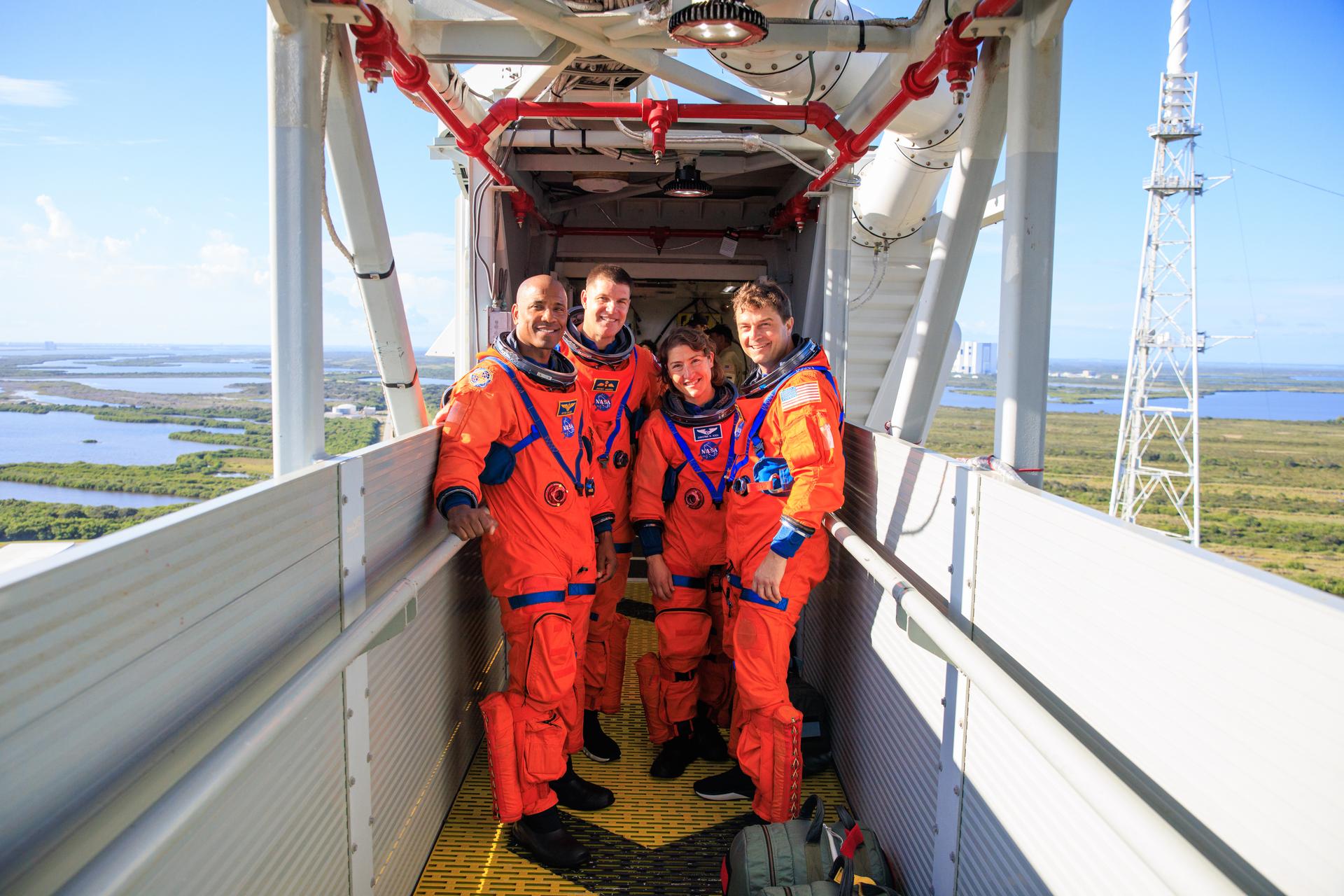
The Artemis II mission, scheduled to carry four humans around the Moon, is a marvel of 20th-century ambition realized with 21st-century tech. But from the perspective of Green Exploration, it highlights a staggering inefficiency.
When we send humans into deep space, roughly 90% of the mass, energy, and budget isn’t for the science—it’s for the “biological tax.” We aren’t just sending explorers; we are sending pressurized tin cans, oxygen scrubbers, radiation shielding, water recycling systems, and enough caloric energy to keep a biological organism from failing in a vacuum.
The Cost of the “Biological Tax”


If we look at the concrete numbers associated with the Artemis program and compare them to the potential of a high-fidelity telepresence fleet:
| Category | Artemis (Human Mission) | Ultimate Telepresence (Robotic Avatar) |
| Estimated Cost | ~$4.1 Billion per launch | ~$100–$250 Million per unit |
| Mission Duration | ~10 Days (limited by life support) | Years (limited by hardware wear) |
| Weight Priority | 90% Life Support / Safety | 90% Science / Imaging / Tools |
| Risk Profile | High (Human life at stake) | Zero (Hardware is replaceable) |
Reallocating the “Bio-Budget”
For the cost of a single Artemis II seat, we could theoretically deploy a constellation of hundreds of “Grapefruit-sized” telepresence nodes across the lunar surface.
- The Science Multiplier: Instead of four humans looking out of a thick lead-glass window for a few days, we could have thousands of students, geologists, and artists “standing” on the Moon simultaneously via the Ultimate VR system.
- The Energy Equation: A human requires roughly 2,000–3,000 calories a day and constant thermal regulation. A telepresence rover runs on a solar panel the size of a pizza box.
Is Artemis Obsolete?
Artemis isn’t “wrong”—it’s a legacy of our desire to physically touch the stars. But in a GreenOS future, we recognize that the “Ultimate VR” isn’t a consolation prize; it’s a superior scientific tool. If we had the system today, the funds from a single Artemis mission could fund a decade of global ecological restoration here on Earth, while still giving us a 1:1 sensory experience of the lunar South Pole.

We don’t need to move our carbon to the Moon to understand it. We just need to move our minds.
It’s Not Physics—It’s Engineering
The most important thing to realize about the ultimate telepresence system is that we aren’t waiting on a breakthrough in new physics. We don’t need to discover a new particle or invent “warp drive.”
We have the science today. We already understand light fields. We already build high-torque, low-latency actuators. We already have the orbital mechanics to put hardware on any rock in the solar system. Building this system is a pure engineering challenge, no different than the decision to go to the moon in 1962. It is a matter of integration, miniaturization, and—most importantly—funding.
The Missing “Moonshot”
Currently, we spend billions figuring out how to keep a biological body from decaying in microgravity. We spend decades hardening “human-rated” systems because the cost of failure is a tragedy. But if we redirected that same level of sovereign-scale funding toward the Telepresence Stack, we would achieve the payout almost immediately:
- The ROI of Presence: Unlike a moon landing, which is a “one-and-done” event, every dollar spent on telepresence engineering has a double payout. A sensor developed for a lunar rover today becomes the tool that monitors a bleaching coral reef tomorrow.
- The “Software” Advantage: Once the hardware is in place, the system improves via software. We can “up the resolution” of our exploration without launching a new rocket, simply by improving our neural rendering and compression algorithms.
Choosing the Future
We are at a crossroads in the history of exploration. We can continue to pour our resources into the incredibly expensive, high-risk endeavor of moving our heavy, fragile bodies across the vacuum. Or, we can recognize that the ultimate “Green” technology is the one that leaves the body at home while the mind roams free.
The payout isn’t just a cheaper way to see Mars. The payout is a planet that isn’t burdened by the fuel and waste of our curiosity. It’s a world where we spend our “Bio-Budget” on fixing Earth, while our robotic avatars build the future in the stars.
We have the blueprints. We just need to decide that Presence is worth the investment.
 GreenOS.org | CLEAN POWER
The Untapped Potential of Geothermal Energy: A Sustainable Power Source
As the world intensifies its pursuit of renewable energy, geothermal energy stands out as a remarkable, yet often overlooked, resource. By tapping into the Earth's natural heat, geothermal power offers a clean, reliable, and sustainable...
Frequently Asked Questions
What is telepresence in the context of green exploration?
Telepresence is the use of advanced robotics and immersive VR to experience remote environments as if you were physically present, allowing exploration with minimal environmental impact and dramatically reduced travel emissions.
Why is telepresence important for sustainability?
It enables scientists, educators, and explorers to study fragile ecosystems or distant worlds without disturbing them, while replacing fuel‑intensive travel with clean, remote presence.
How close are we to achieving human‑equivalent telepresence?
Key components such as light‑field capture, varifocal displays, neural rendering, and high‑dynamic‑range sensors are rapidly advancing, but full human‑equivalent fidelity requires integrating these technologies into a seamless system.
Can telepresence replace physical exploration?
It won’t replace the emotional value of being together in person, but it can eliminate most risky, resource‑intensive, or routine travel while expanding access to places humans cannot safely go.
What technologies are essential for the ultimate telepresence system?
Light‑field imaging, holographic or varifocal displays, eye‑tracking, clean‑energy robotics, ultra‑low‑latency communication networks, and eventually humanoid avatars capable of acting as physical extensions of their operators.
Will telepresence reduce the need for air and car travel?
As fidelity improves, many forms of business travel, site visits, inspections, and routine trips will shift to telepresence, lowering emissions while preserving meaningful in‑person experiences for when they matter most.
How do avatars change the future of work and exploration?
Embodied robotic avatars allow people to “be” in distant locations through machines that walk, interact, and operate on their behalf, enabling safer exploration, more inclusive participation, and new forms of remote labor.
Will robots eventually perform most physical work?
As avatars accumulate years of human‑guided behavior and AI learns from those patterns, robots will take on more physical tasks—from space mining to ecological restoration—while humans focus on creativity, leadership, and stewardship.
Final Thoughts
The ultimate telepresence system is more than a technological milestone; it is a redefinition of presence, mobility, and exploration. It blends sustainability with ambition, showing that the future of discovery doesn’t have to be extractive or exclusive. It can be clean, accessible, and deeply human. Telepresence becomes a way to expand our reach while shrinking our footprint, allowing us to explore boldly without overwhelming the world we depend on.
Crucially, this is no longer a question of new physics or distant miracles—it is a pure engineering challenge. Just as the original moonshot was a matter of national will and focused investment, the transition to telepresence is a choice we make today about where our funding and ingenuity belong. We have the science; we simply need to build the bridge. By choosing to engineer presence rather than just life support, we unlock a payout that serves both the stars and our home soil.
As avatars evolve into physical extensions of ourselves, the boundaries of identity and geography begin to soften. People connect through intention rather than limitation. Work becomes safer. Travel becomes purposeful. Exploration becomes sustainable. And the universe becomes a place we can visit without carrying the weight of biological fragility into every frontier.
Green exploration invites us to imagine a world where discovery expands without harm, where innovation supports resilience, and where the limits of experience are defined not by distance, but by imagination. Telepresence is the tool that will carry us there—turning Earth into a living laboratory, turning space into a reachable horizon, and turning human curiosity into a force for regeneration rather than depletion.
When we combine clean energy, robotics, immersive VR, and embodied avatars, we create a future where humanity can explore more, impact less, and build a world that is not just sustainable, but beautifully interconnected. The blueprints are ready. It’s time to start the build.