Table of Contents
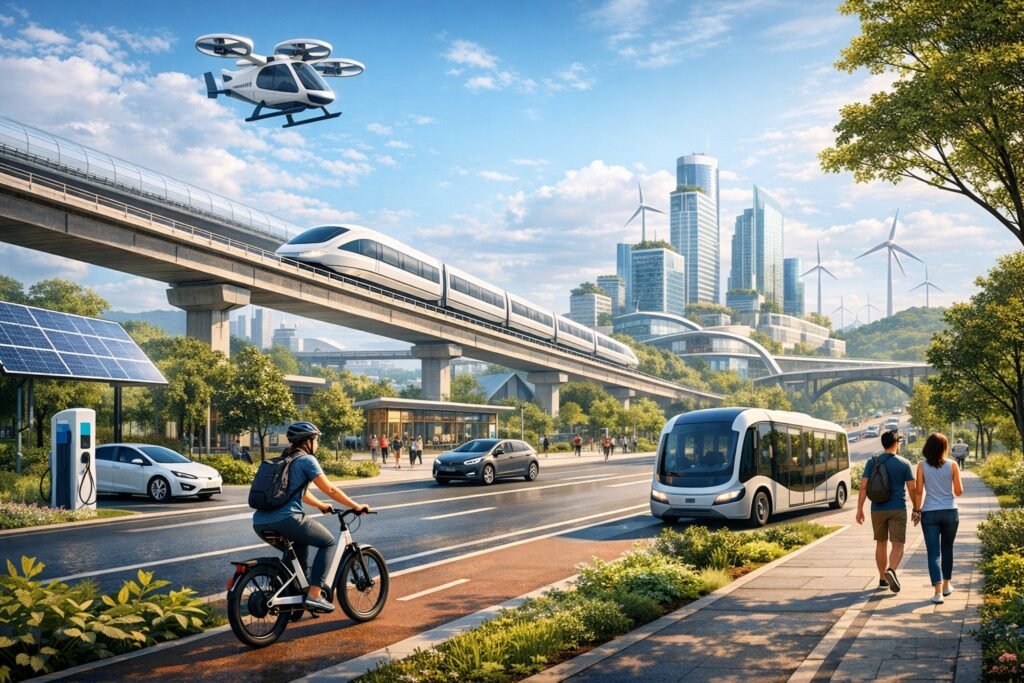
Transportation is the heartbeat of a thriving society, but our current models are built on outdated infrastructure. We examine the convergence of electric mobility, high‑speed rail, and walkable urban design to see how we can move people more efficiently while reclaiming our streets for human potential.
A post‑carbon world isn’t just cleaner—it’s smoother, quieter, more connected, and profoundly more human. Mobility becomes a seamless experience, not a daily negotiation with congestion, noise, and fossil‑fuel dependence. This is the future we’re building toward: a transportation ecosystem where clean energy, smart design, and intuitive systems work together to move people effortlessly.
This post explores how that transformation unfolds, and how the choices we make today—both personal and structural—shape the mobility networks of tomorrow.
The Rise of Post‑Carbon Mobility
The shift away from fossil fuels is more than an environmental necessity. It’s a structural upgrade to how society moves. Electric vehicles, renewable‑powered transit, and walkable cities are converging into a mobility system that is:
- Cleaner
- More efficient
- More resilient
- More equitable
- More enjoyable
This is not a distant vision. It’s already happening in cities, regions, and transportation corridors around the world.
Why Mobility Must Evolve
Mobility defines opportunity. When transportation is slow, expensive, or unreliable, everything downstream suffers—jobs, education, health, and community life.
A post‑carbon mobility system solves several long‑standing problems:
1. Congestion and Inefficiency
Electric buses, micro‑mobility, and high‑speed rail reduce traffic pressure and create smoother flows.
2. Air Pollution and Health Impacts
Zero‑emission transportation dramatically improves air quality, especially in dense urban areas.
3. Energy Dependence
Electrified mobility reduces reliance on imported oil and strengthens local energy resilience.
4. Climate Commitments
Transportation is one of the largest sources of emissions; decarbonizing it is essential for global climate goals.
5. Urban Livability
Walkable streets, bike networks, and transit‑first design create cities that feel alive, not overwhelmed by vehicles.
The Three Pillars of Post‑Carbon Mobility
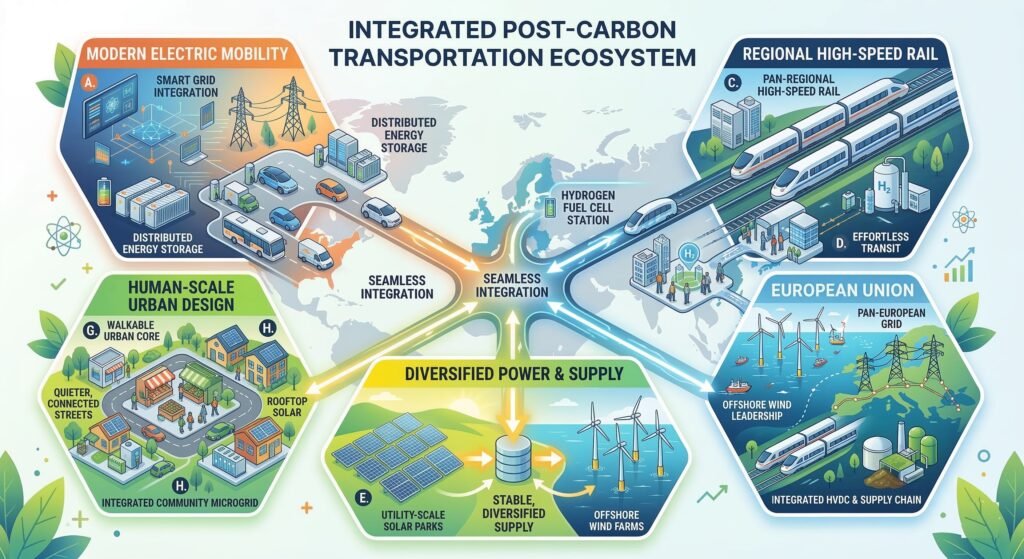
A seamless mobility future rests on three interconnected pillars: electric mobility, high‑speed rail, and walkable urban design. Together, they form a system that is flexible, efficient, and deeply human‑centered.
1. Electric Mobility: The Quiet Revolution
Electric mobility is the foundation of the post‑carbon transition. It includes:
- Electric cars
- Electric buses
- Electric bikes and scooters
- Electric freight vehicles
- Charging infrastructure
- Vehicle‑to‑grid integration
Why It Matters
Electric mobility reduces emissions, lowers operating costs, and integrates directly with renewable energy systems. It also unlocks new possibilities:
- Smart charging that stabilizes the grid
- Bidirectional charging that supports homes and microgrids
- Cleaner, quieter streets
- Lower maintenance and fuel costs
Electric mobility is not just a cleaner version of the old system—it’s a smarter, more adaptable one.
2. High‑Speed Rail: The Backbone of Regional Connectivity
High‑speed rail is the missing link in many national mobility systems. It offers:
- Fast, reliable intercity travel
- Lower emissions than air travel
- High passenger capacity
- Predictable schedules
- Energy efficiency
Why It Matters
High‑speed rail creates regional super‑networks where cities become connected hubs rather than isolated nodes. It reduces short‑haul flights, eases highway congestion, and supports economic development along rail corridors.
In a post‑carbon world, high‑speed rail becomes the backbone of long‑distance mobility.
3. Walkable Urban Design: Reclaiming Streets for People
The most sustainable trip is the one you don’t need a vehicle for. Walkable design includes:
- Mixed‑use neighborhoods
- Safe pedestrian infrastructure
- Protected bike lanes
- Transit‑oriented development
- Car‑free zones
- Human‑scaled streets
Why It Matters
Walkable cities reduce emissions, improve health, and strengthen community life. They also reduce the need for expensive transportation infrastructure by making daily life more local.
Walkability is not a luxury—it’s a cornerstone of a resilient, post‑carbon society.
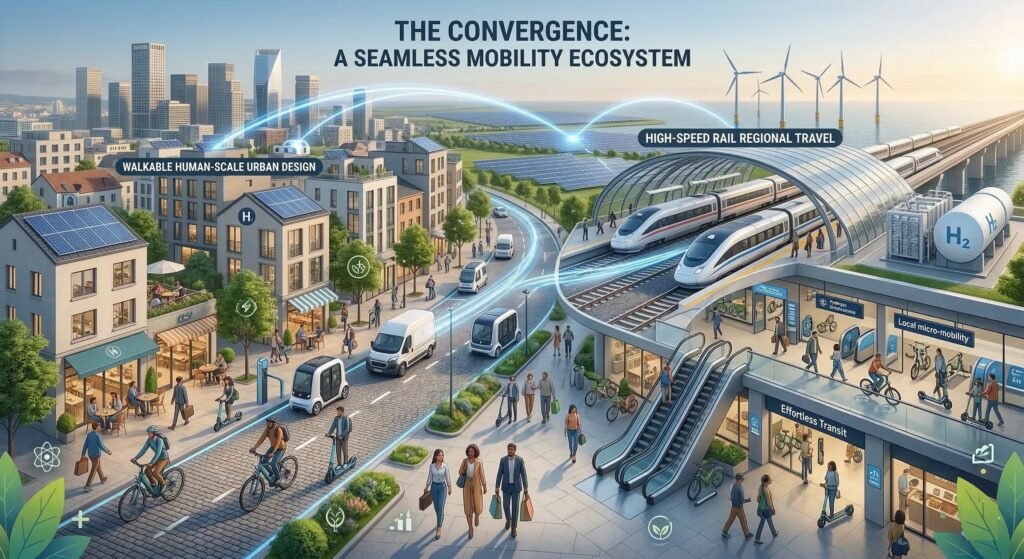
The Convergence: A Seamless Mobility Ecosystem
The magic happens when these three pillars work together.
Electric mobility handles local and mid‑range trips.
EVs, e‑bikes, and electric buses create clean, flexible movement within cities.
High‑speed rail handles regional travel.
People move between cities quickly without relying on planes or long‑distance driving.
Walkable design reduces the need for vehicles entirely.
Daily life becomes easier, healthier, and more connected.
This creates a mobility ecosystem where every mode supports the others, forming a seamless journey from doorstep to destination.
The Role of Clean Energy in Mobility
A post‑carbon mobility system only works if the energy behind it is clean. That means:
- Solar‑powered charging
- Wind‑powered rail networks
- Grid‑scale storage
- Microgrids for resilience
- Hydrogen for heavy transport
- Smart grid integration
Mobility becomes an extension of the clean‑energy transition—not a separate challenge.
How Individuals Contribute to the Mobility Shift
A post‑carbon mobility future isn’t only built by governments and engineers. It’s shaped by everyday choices:
- Choosing to walk or bike for short trips
- Using public transit when available
- Supporting local EV infrastructure
- Advocating for safer streets
- Reducing unnecessary car trips
- Embracing shared mobility options
Small actions accumulate into cultural momentum.
The Future of Mobility: What Comes Next
The next decade will bring innovations that make mobility even more seamless:
- Autonomous electric shuttles
- Solar‑integrated vehicles
- Hyperloop‑style corridors
- AI‑optimized traffic systems
- Smart intersections
- Mobility‑as‑a‑service platforms
- Regional clean‑energy supergrids
These technologies will not replace human‑centered design—they will enhance it.
Frequently Asked Questions
What does “post‑carbon mobility” mean?
It refers to transportation systems powered by clean energy instead of fossil fuels, creating a more efficient and sustainable mobility ecosystem.
How does electric mobility support a post‑carbon future?
Electric vehicles reduce emissions, integrate with renewable energy, and offer lower operating costs while improving air quality.
Why is high‑speed rail important in a post‑carbon world?
It provides fast, low‑emission regional travel that reduces reliance on short‑haul flights and highway congestion.
What role does walkability play in sustainable mobility?
Walkable design reduces the need for vehicles, improves health, and strengthens community life while lowering emissions.
Can individuals influence the mobility transition?
Yes—everyday choices like walking, biking, using transit, and supporting clean‑energy policies help accelerate the shift.

 GreenOS.org | SUSTAINABLE HOME
The Efficient Sanctuary: Optimizing Your Living Space
Creating an efficient sanctuary isn’t about shrinking your life into a minimalist box or transforming your home into a hyper‑engineered machine. It’s about designing a living space that supports your well‑being, reduces waste, and aligns...
Final Thoughts
A post‑carbon mobility world is not a distant dream—it’s a blueprint already taking shape. By combining electric mobility, high‑speed rail, and walkable urban design, we create a transportation ecosystem that is cleaner, faster, and more human‑centered. This is the seamless journey ahead: a world where movement is effortless, streets are reclaimed for people, and clean energy powers every mile.
The choices we make today—both personal and collective—lay the foundation for a mobility system that supports creativity, resilience, and human progress. In this future, sustainability isn’t a constraint. It’s the operating system for a better‑built world.