Table of Contents
Every dollar spent is a vote for the kind of future we want to build. Mindful consumption moves us away from impulsive “green” shopping toward a philosophy of durability, repairability, and ethical transparency, helping us find products that align with the long-term vision.
Why Intentional Purchasing Matters
Intentional purchasing is more than just avoiding waste—it’s about aligning our buying decisions with our values. It helps:
- Reduce environmental impact
- Support ethical labor practices
- Encourage product longevity and repairability
- Shift demand toward sustainable innovation
This mindset transforms consumption into a tool for systemic change.
The Pitfalls of Label-Based Shopping
Labels like “eco-friendly,” “natural,” or “green” can be misleading. Greenwashing is rampant, and many products marketed as sustainable still rely on extractive practices or disposable design.
Common Label Traps
- Vague claims without third-party certification
- Overemphasis on packaging instead of product lifecycle
- Products that are recyclable but not actually recycled
Intentional purchasing means looking beyond the label to understand the full story.
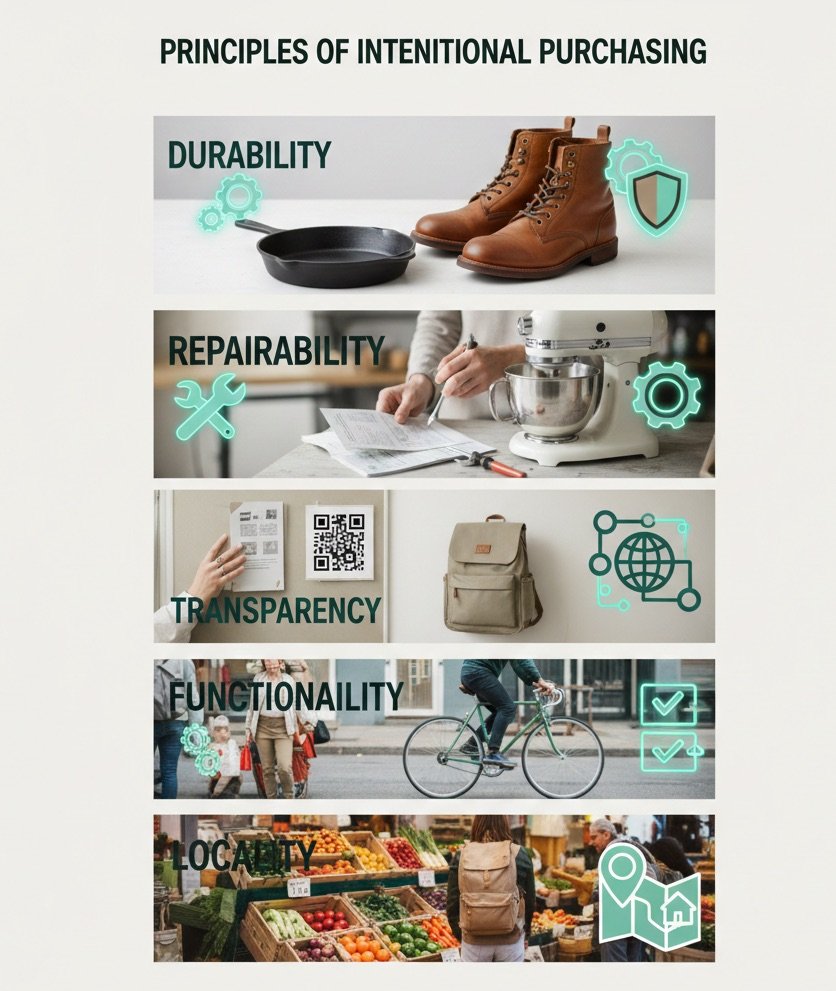
Principles of Intentional Purchasing
Durability
Choose items built to last. This reduces replacement cycles and waste.
Repairability
Support brands that offer parts, manuals, and repair services. A fixable product is a sustainable product.
Transparency
Look for companies that disclose sourcing, labor conditions, and environmental impact.
Functionality
Buy what works for your life—not what’s trending. A well-used item is more sustainable than a rarely-used “green” alternative.
Locality
Support local makers and regional supply chains to reduce transportation emissions and strengthen community resilience.
How to Audit Your Purchasing Habits
Step 1: Track Your Purchases
Log what you buy over a month. Include food, clothing, tech, and household items.
Step 2: Categorize by Purpose
Was it a need, a replacement, or an impulse? Did it solve a problem or create one?
Step 3: Assess Longevity
How long will it last? Is it reusable, repairable, or destined for landfill?
Step 4: Identify Patterns
Are there brands you trust? Categories where you overspend? Items you regret?
This audit reveals where your habits align—or clash—with your values.
Tools for Smarter Buying
Certifications to Trust
- Fair Trade
- USDA Organic
- Energy Star
- Cradle to Cradle
Apps and Platforms
- Good On You (ethical fashion)
- EWG Skin Deep (cosmetics)
- Buy Me Once (durable goods)
- Repair.org (repair resources)
These tools help you cut through marketing and make informed choices.
Visionary Consumption
Intentional purchasing isn’t just about individual ethics—it’s about building systems that:
- Incentivize sustainable design
- Reward transparency and accountability
- Reduce resource strain across supply chains
- Empower consumers to shape markets
This is how we shift from extractive economies to regenerative ones.
Frequently Asked Questions
What is intentional purchasing?
It’s the practice of buying with purpose, aligning purchases with sustainability, ethics, and long-term value.
How do I avoid greenwashing?
Look for third-party certifications, full lifecycle disclosures, and brands with proven transparency.
Is buying less always better?
Often, yes. Reducing consumption is the most direct way to lower your footprint.
Can I be intentional on a budget?
Absolutely. Focus on durability, repairability, and secondhand options to maximize impact.
What’s the first step to becoming a mindful consumer?
Start by tracking your purchases and asking why you’re buying each item.

 GreenOS.org | CLEAN POWER
The Untapped Potential of Geothermal Energy: A Sustainable Power Source
As the world intensifies its pursuit of renewable energy, geothermal energy stands out as a remarkable, yet often overlooked, resource. By tapping into the Earth's natural heat, geothermal power offers a clean, reliable, and sustainable...
Final Thoughts
Intentional purchasing is a quiet revolution. It’s not flashy, but it’s powerful. Every choice you make sends a signal—to brands, to markets, to future innovators. When you buy with purpose, you build a world that values durability, transparency, and human progress.
Sustainable living starts with informed decisions. Beyond the label lies the real story—and the real opportunity to shape a better-built world.